


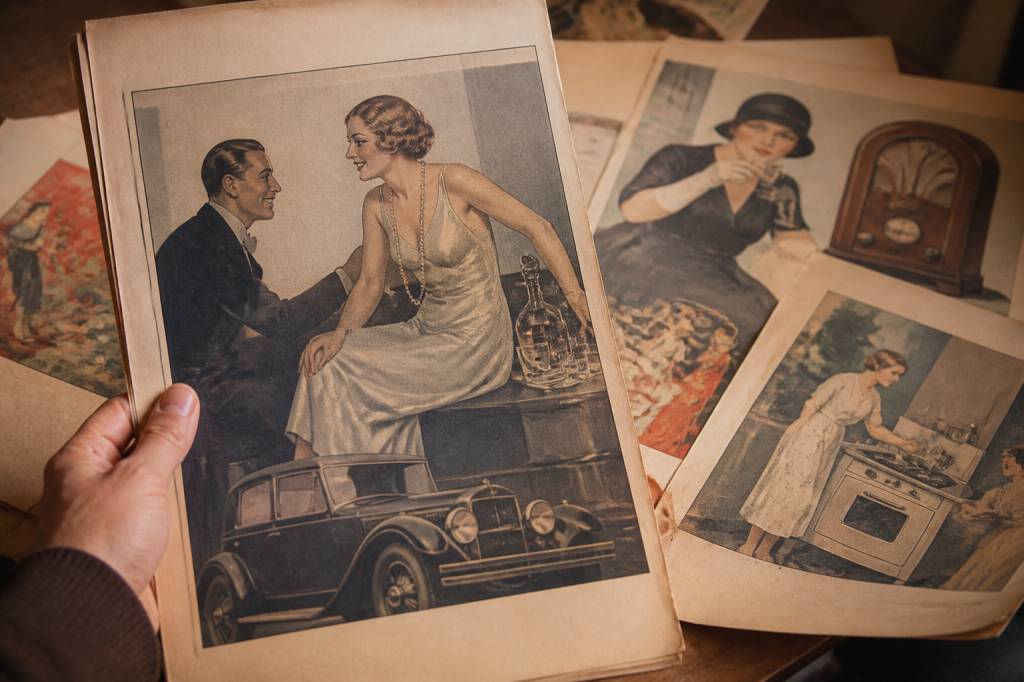
Modern advertising often looks like a digital game: short videos, targeted messages, influencer partnerships and data-driven campaigns. Yet many of the techniques behind today’s most recognisable brands were already being tested nearly a century ago.
In the 1930s, advertising moved from simple product announcements to something more ambitious. Brands began selling lifestyles, identities and emotional reassurance. They used memorable characters, distinctive packaging, repeated slogans and carefully chosen media channels. The technology was different, but the strategic questions sound familiar: Who is the customer? What problem does the product solve? What feeling should the brand create?
The decade was also marked by economic hardship, political uncertainty and rapid changes in mass media. That combination forced companies to become more precise. A good advert could not simply list features. It had to earn attention, justify spending and make a product feel relevant to everyday life.
A decade that changed the advertising business
The 1930s began during the aftermath of the Wall Street Crash and the Great Depression. Consumers had less disposable income, while manufacturers faced intense pressure to maintain sales. Advertising therefore became a practical business tool, not merely a decorative exercise.
At the same time, households were becoming increasingly connected through mass media. Radio brought brands into the home with a personal, conversational tone. Newspapers and magazines offered national reach and attractive visual layouts. Posters, shop displays and cinema advertising extended campaigns into public spaces.
This wider media environment encouraged a new discipline: building a consistent brand across several channels. A company might use a magazine illustration to introduce a product, a radio programme to repeat its promise and point-of-sale material to influence the final purchase.
The principle remains central to modern marketing. A customer may discover a brand on social media, research it through a search engine and buy it in a physical shop. The format has changed, but consistency still matters.
From product information to emotional persuasion
Earlier advertising often focused on what a product was and how it worked. During the 1930s, campaigns increasingly explored what the product could represent.
Soap was no longer only about cleaning. It could suggest respectability, confidence or social success. Food products were connected to family care and modern domestic efficiency. Cars represented freedom, status and progress. Cigarettes were promoted through ideas of sophistication, independence and glamour, despite the serious health risks now associated with tobacco.
This shift was not accidental. Advertising agencies were becoming more interested in psychology and consumer behaviour. They studied habits, aspirations and anxieties, then translated those insights into visual and verbal messages.
In simple terms, the question changed from “What does this product do?” to “What does owning this product say about me?” That question sits at the heart of modern branding, from sportswear to smartphones.
The power of a recognisable character
One of the most durable ideas from 1930s advertising was the use of brand characters. A character could make an otherwise ordinary product easier to remember and more human.
Consider the Michelin Man, known as Bibendum. The character originated earlier, in the nineteenth century, but his visual identity continued to develop during the twentieth century. By appearing in different situations, he helped transform tyres from a technical purchase into a memorable brand story.
Another influential example is the Jolly Green Giant. The character was introduced by the Minnesota Valley Canning Company in the 1920s and became increasingly recognisable through later advertising. The giant gave vegetables a distinctive personality, which is not a small achievement in a category rarely associated with excitement.
These characters worked because they performed several jobs at once:
- They created instant visual recognition.
- They made products easier for children and adults to remember.
- They gave the brand a consistent personality.
- They could appear across posters, packaging, radio promotions and shop displays.
Today, the same principle appears in mascots, animated logos and virtual brand ambassadors. The difference is that a modern character can appear in a TikTok video one minute and an app interface the next. The underlying strategy remains unchanged: make the brand easier to recognise than its competitors.
Packaging became part of the message
In the 1930s, packaging was no longer treated as a simple container. It became a form of advertising that travelled directly into the customer’s home.
This mattered particularly for products sold in crowded retail environments. A distinctive colour, shape or label could make the difference between being noticed and being ignored. Brands began to understand that the customer often encountered the package before reading any detailed information about the product.
Coca-Cola is a useful example. Its contour bottle had been introduced earlier, in 1915, but its distinctive shape continued to strengthen the brand’s identity during the 1930s. The bottle could be recognised by touch or silhouette, even when displayed among competing soft drinks.
That is a powerful lesson for modern businesses. A brand does not always need more information. Sometimes it needs a stronger visual signal. The shape of a bottle, the colour of an app icon or the layout of an email can communicate familiarity before a single word is processed.
Packaging also helped brands suggest a particular lifestyle. Art Deco influences, streamlined typography and bright colour schemes conveyed modernity and optimism. In a period defined by economic uncertainty, a well-designed package could make an everyday purchase feel more advanced, reliable or aspirational.
Radio introduced the brand voice
Radio changed advertising because it created a direct relationship between brands and listeners. Instead of reading a printed message, audiences heard a voice entering their homes. That made tone, rhythm and repetition extremely important.
Brands sponsored programmes, created memorable jingles and developed characters that could return week after week. The advertisement was no longer an isolated interruption. It became part of a wider listening experience.
This helped establish the idea of a brand voice. A company could sound friendly, authoritative, humorous or reassuring. The voice was not just a script; it was a personality.
Modern businesses have more channels to manage, but the challenge is familiar. A brand may communicate through website copy, customer support, podcasts, social posts and video. If each channel sounds as though it belongs to a different company, trust becomes harder to build.
The best 1930s campaigns understood repetition without becoming completely mechanical. A slogan or jingle had to be heard often enough to be remembered, but delivered with enough variation to remain interesting. Current marketers face the same balancing act with recurring social media formats and email campaigns.
Advertising sold modern life
The 1930s were fascinated by modernity. Electricity, household appliances, motor cars, aviation and mass production all suggested a future arriving at speed. Advertising connected these developments to ordinary routines.
Household brands often presented technology as a way to save time and reduce effort. Washing machines, refrigerators and vacuum cleaners were promoted not simply as machines, but as tools for a more efficient and comfortable home.
This was a major change in positioning. Instead of asking consumers to admire technical specifications, adverts showed how products could improve daily life. The message was practical but aspirational: buy this item and your routine will become easier, cleaner or more respectable.
Many software companies use the same argument today. They rarely sell a list of technical functions alone. They promise fewer administrative tasks, faster collaboration or a better work-life balance. The interface may be digital rather than mechanical, but the promise of “modern life made easier” is remarkably similar.
Travel advertising created a mood
Travel posters from the 1930s remain popular because they did more than provide information. They created a visual fantasy of movement, escape and discovery.
Railway companies, shipping lines and tourism organisations used simplified illustrations, dramatic landscapes and elegant typography to make destinations feel accessible and desirable. A poster might show a sunlit coastline, a glamorous train or an idealised city skyline. It did not need to explain every detail of the journey. Its role was to create the desire to go.
British railway advertising was particularly influential in turning destinations into visual brands. Posters for seaside towns and countryside routes used strong compositions that could be understood quickly from a distance. The destination became associated with a mood: health, leisure, romance or adventure.
Modern destination marketing still relies on this approach. A tourism board may publish practical transport information, but its most successful campaigns usually begin with an image or story that answers a more emotional question: how will I feel when I arrive?
There is a practical lesson here for travel businesses. Useful information earns confidence, but atmosphere earns attention. Strong campaigns need both.
Gender, aspiration and the limits of the era
Vintage advertising can be visually impressive while reflecting the social limitations of its time. Many 1930s campaigns used narrow ideas about gender, class and family life.
Women were frequently shown as housekeepers, mothers or objects of admiration. Men appeared as breadwinners, professionals or adventurous consumers. These representations were not neutral. They reinforced expectations about who made decisions, who performed domestic work and what success looked like.
Some campaigns also used class anxiety to sell products. Advertising suggested that the right soap, clothing or household appliance could protect a person from embarrassment or improve their social standing. The technique was effective because it addressed a real fear: being judged by others.
Modern advertising has become more diverse in many markets, but the mechanism has not disappeared. Campaigns still use insecurity, status and belonging to influence behaviour. The difference is that audiences are quicker to challenge stereotypes and misleading promises.
Looking back critically matters. The history of advertising is not only a collection of clever slogans and beautiful posters. It is also a record of the values that companies chose to promote—and the people they left out.
What modern brands still borrow from the 1930s
The most important legacy of 1930s advertising is not a particular typeface or poster style. It is the systematic construction of brand memory.
Successful campaigns of the period usually combined several elements:
- A clear promise: the product solved a recognisable problem or supported a desirable lifestyle.
- A distinctive identity: colours, characters, packaging and typography made the brand easy to identify.
- Emotional relevance: the message connected with confidence, comfort, family, progress or escape.
- Consistent repetition: the same ideas appeared across different media over time.
- A practical route to purchase: the customer knew where to find the product and why it was worth paying for.
Replace radio with podcasts, posters with Instagram and shop displays with e-commerce pages, and the framework still works.
This is why vintage marketing continues to influence modern brands. A contemporary campaign may use artificial intelligence, real-time data and personalised advertising, but it still needs to be noticed, remembered and trusted. Technology can improve distribution. It cannot replace a meaningful idea.
How businesses can apply the lessons today
Small businesses do not need a huge advertising budget to use these principles. They need discipline and consistency.
Start by defining one useful promise. What problem does the business solve, and why should a customer believe it? Avoid vague claims such as “high quality” or “excellent service” unless they are supported by a specific example.
Next, choose a small set of recognisable brand assets. This could include a colour palette, a visual motif, a memorable phrase or a distinctive tone of voice. Repetition is not laziness when it builds recognition.
Then connect the product to an everyday situation. Show the customer using it, not merely looking at it. A 1930s household advert might show a machine saving time during a busy morning. A modern software company can show the same benefit through a real workflow, before-and-after comparison or customer case study.
Finally, review the message across every channel. Does the website make the same promise as the social media profile? Does the packaging match the tone of the customer service team? If the answer is no, the brand is paying for communication that works against itself.
The 1930s proved that advertising becomes powerful when it turns a product into a familiar character in people’s lives. That idea has survived newspapers, radio, television, websites and social media. The formats keep changing. The need for clarity, recognition and human relevance does not.