
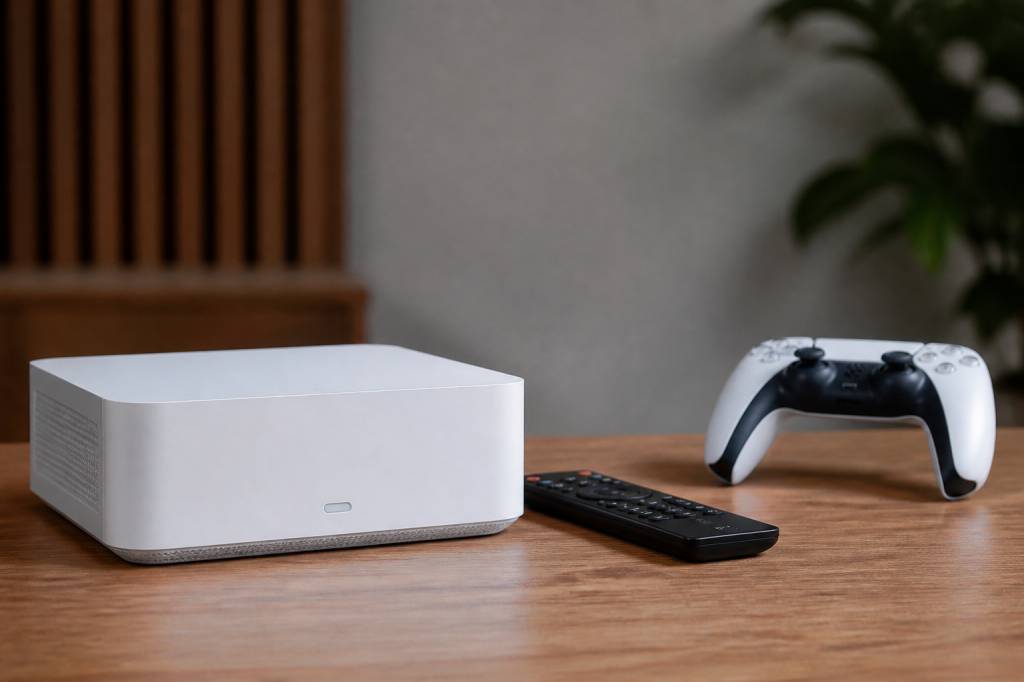
1536 play review: everything you need to know
If you’ve landed on 1536 Play and are trying to figure out whether it’s worth your time, you’re not alone. The name sounds promising, the landing page may sound even more promising, and yet the real question is the only one that matters: does it actually do the job, or is it just good marketing with a button?
This review breaks down the essentials in plain English: what 1536 Play is designed to do, where it seems to work well, where it may frustrate users, and what to check before you commit. No fluff, no fanfare, just the practical stuff people usually want after five minutes of reading vague product pages.
What 1536 Play is trying to solve
Most digital tools or platforms succeed for one simple reason: they remove friction. If 1536 Play is on your radar, it likely sits somewhere in that territory — a product meant to make access, playback, browsing, or interaction smoother than a more clunky alternative.
That sounds obvious, but it matters. A tool doesn’t need to be revolutionary to be useful. Sometimes the real value is much smaller and much more important: fewer clicks, fewer errors, less waiting, and less confusion. That’s what users usually pay for, even when the marketing copy talks about “seamless experiences” and “next-level engagement.”
The key thing to ask is not “Does it sound innovative?” but “What problem does it remove in real life?” If 1536 Play helps you save time, simplify access, or centralize something you already do repeatedly, then it may have genuine value. If it only adds another dashboard to manage, the answer is less exciting.
First impressions: design and usability matter more than slogans
With products like this, the first interaction often tells you almost everything you need to know. Is the interface clean? Can you figure it out without a tutorial? Does it feel responsive, or does every action seem to load with the enthusiasm of a Monday morning?
Usability is not a cosmetic detail. It’s the difference between a product that gets used daily and one that gets abandoned after the first login. In practice, people judge tools on a few basic things:
- How quickly they understand the layout
- Whether the main action is easy to find
- How many steps are needed to complete a task
- Whether the platform behaves consistently across devices
- Whether support or help content is easy to access
If 1536 Play gets these basics right, it already has an advantage. If it doesn’t, any advanced feature becomes less relevant, because users won’t stay long enough to care.
Features worth paying attention to
A review is only useful if it gets beyond vague praise and looks at what the product actually does. Without overstating what 1536 Play may offer, the features you should evaluate fall into a few practical buckets.
Ease of access: Can you get started quickly, or do you need to jump through sign-up hoops, verification steps, and unnecessary setup screens?
Performance: Does it load smoothly and respond well under normal use? Slow platforms are like restaurants with great menus and cold food — not a lasting success story.
Stability: Does it behave predictably, or do functions fail at random? A polished tool should feel boring in the best possible way: it works when you need it.
Compatibility: If you use different devices, does it behave the same way on desktop, mobile, or tablet? A tool that only works properly in one environment is already asking you to compromise.
Support and documentation: When something goes wrong, is help available without digging through forum posts from three years ago?
If 1536 Play scores well in these areas, that’s a strong sign it was built with actual users in mind rather than just investors, advertisers, or whoever approved the launch deck.
Where users are likely to feel the difference
The most useful software or platform reviews always come back to daily experience. Not the launch-day excitement. Not the marketing screenshots. The daily stuff.
Think of the typical user journey. You open the platform, find what you need, complete a task, and leave. If 1536 Play shortens that process even by a few minutes, the benefit adds up quickly over time. That’s especially true for people who use similar tools often, whether for work, entertainment, or routine personal tasks.
For example, a user managing content or media every day may not care about fancy visuals. They care about whether the tool helps them:
- Find content faster
- Reduce repetition
- Keep everything organised
- Avoid technical issues
- Move between tasks without friction
That’s the real standard. If 1536 Play makes these tasks easier, it earns its place. If not, it becomes one more thing to remember and another password to reset.
Pricing: what should you really expect?
Price is often where interest becomes realism. A tool can look impressive right up until the moment you compare the cost with what you actually need.
So, is 1536 Play good value? The honest answer depends on how often you’ll use it and how much time or hassle it saves. If it’s a niche tool you open once in a while, even a low fee may feel too high. If it replaces several other tools or reduces manual work, a modest subscription can be justified quickly.
When assessing value, don’t ask only “How much does it cost?” Ask:
- Is there a free trial or demo?
- Are the core features included in the base plan?
- Are there hidden charges for upgrades, exports, or support?
- Is the pricing transparent or buried in fine print?
- Would I still pay for it after a month of real use?
That last question is the one that filters out most impulse decisions. A product is not a bargain if you stop using it after two weeks.
Potential drawbacks to watch for
Every platform has trade-offs. If a review pretends otherwise, it’s probably advertising in disguise.
One common issue with modern digital products is overpromising on simplicity while hiding complexity underneath. Another is feature overload: too many options, too many menus, too many ways to get lost. A third is poor transparency around technical requirements, compatibility, or account limitations.
Before adopting 1536 Play, watch for the usual warning signs:
- Unclear feature descriptions
- Limited documentation
- Pricing that changes depending on where you click
- Too much emphasis on marketing language, too little on product detail
- Weak customer support signals
If any of those show up early, don’t ignore them. Small issues at the start usually become bigger issues once you rely on the product regularly.
Who 1536 Play may be best for
The best way to judge a product is not by asking whether it’s universally “good.” Few things are. The better question is: good for whom?
1536 Play is likely a better fit if you are someone who values speed, straightforward access, and minimal setup. It may also suit users who prefer tools that are easy to understand without a long onboarding process.
It could be less suitable if you need deep customization, enterprise-level controls, or a very specific workflow that leaves no room for compromise. In other words: if you want something elegant and efficient, it may work well. If you need something highly specialised, you should test it carefully before betting time or money on it.
A simple way to decide:
- Choose it if your priority is convenience
- Choose it if you want a lighter learning curve
- Choose it if you need an everyday tool that “just works”
- Think twice if your use case depends on advanced configuration
- Think twice if support and reliability are non-negotiable
How to test it properly before committing
Here’s the part most people skip, then regret later. Don’t evaluate 1536 Play by a quick glance. Test it like a sceptic, not like a fan.
Use it for the tasks that matter most to you. Try it at the time of day you’d normally rely on it. Open it on the device you use most. If possible, push it a little beyond the obvious demo scenario. A tool that performs nicely in a controlled environment can behave very differently under everyday pressure.
A practical checklist for your trial period:
- Can I complete the main task in under five minutes?
- Does it feel intuitive without external help?
- Are there any recurring bugs or slowdowns?
- Is the interface clear on mobile and desktop?
- Do I trust it enough to use again tomorrow?
If the answer to most of those is yes, you’re probably looking at a product with real utility. If not, the decision becomes easier than the marketing suggests.
The short version: is 1536 Play worth it?
Based on what matters in a practical review, 1536 Play should be judged less on hype and more on everyday usefulness. If it is fast, intuitive, stable, and reasonably priced, it has the ingredients of a solid choice. If it makes simple things feel complicated, the shine wears off quickly.
That’s the truth with most digital products. The best ones don’t demand admiration. They quietly save time, reduce friction, and let you get on with your day. Which, frankly, is more impressive than another platform boasting about being “revolutionary.”
If you’re considering 1536 Play, the smartest move is simple: test the core experience, compare the price against the value you expect, and pay attention to how it feels after the novelty fades. That’s where the real verdict lives.
À propos de l'auteur