Best planes in the world: 10 aircraft that changed aviation
What makes an aircraft one of the best in the world? It is not simply speed, size or a record-breaking flight. Some planes changed who could travel, how airlines operated or what engineers believed was possible. Others proved their value in a crisis, where performance mattered more than publicity.
Here are ten aircraft that left a lasting mark on aviation. They span more than a century, from the first controlled powered flight to today’s long-haul jets. Their influence is not identical: some transformed commercial travel, while others changed military aviation or made flying accessible to ordinary people.
Wright Flyer: the first controlled powered flight
On 17 December 1903, near Kitty Hawk, North Carolina, Orville Wright flew the Wright Flyer for 12 seconds, covering about 120 feet. That may sound modest beside today’s non-stop flights across oceans. At the time, however, the achievement was extraordinary: the aircraft was powered, heavier than air and controlled by its pilot.
The Wright brothers’ most important contribution was not just building an engine-powered machine. They developed a practical system for controlling an aircraft in three dimensions, using wing warping, a forward elevator and a rudder. Their experiments with gliders and wind tunnels helped turn flying from a hopeful stunt into an engineering discipline.
The Flyer did not become a commercial aircraft, and it was difficult to operate. Its significance lies in the problem it solved: how to make a powered aircraft controllable. Every modern aeroplane owes something to that breakthrough.
Douglas DC-3: the aircraft that made airlines viable
Before the DC-3, passenger aviation was often uncomfortable, noisy and financially fragile. The Douglas aircraft changed the economics as well as the experience. Introduced in the 1930s, it carried around 21 to 32 passengers, depending on the version, and could operate routes that suited the growing needs of airlines.
Its range, reliability and useful passenger capacity helped airlines earn money from passengers rather than relying mainly on carrying mail. The DC-3 also became a defining transport aircraft during the Second World War. The military version, known as the C-47 Skytrain in the United States and the Dakota in British service, carried troops, cargo and supplies across multiple theatres of war.
Its influence lasted unusually long. Many DC-3s continued flying decades after production ended, particularly on remote routes where simple, robust aircraft were more useful than newer technology. Sometimes progress is not about replacing a machine quickly; it is about building one that keeps doing the job.
Supermarine Spitfire: a symbol with real engineering behind it
The Spitfire is often remembered for its role in the Battle of Britain in 1940. Its elliptical wings and distinctive outline made it instantly recognisable, but its reputation was not just a matter of appearance. The fighter combined manoeuvrability with strong performance, and it was continually adapted as the war developed.
There were several versions, with different engines, armament and operational roles. That flexibility mattered. Aircraft are not judged only by their best-known moment; they must also be improved to meet changing threats. The Spitfire served in a range of roles, from interception to reconnaissance, and remained in production until 1948.
Its impact was military rather than commercial, but it demonstrated how aerodynamic design and ongoing development could shape an aircraft’s effectiveness. It also became a lasting reminder of the people and machines that defended Britain during a critical period.
Boeing 707: the jet age goes mainstream
Commercial jet travel existed before the Boeing 707, but this four-engine airliner helped make it a practical reality on major passenger routes. Entering airline service in 1958, the 707 cut journey times compared with propeller aircraft and offered a new level of comfort and capacity for long-distance travel.
The shift was not simply about arriving sooner. Jet engines enabled airlines to rethink schedules, routes and the number of passengers they could carry. A transatlantic flight that had once required more time and, in some cases, intermediate stops became faster and more routine.
The 707 also helped establish the familiar swept-wing, four-engine jetliner as an emblem of international travel. It brought new challenges, too: airports needed to accommodate larger aircraft, and airlines had to manage higher speeds, more complex maintenance and increased demand. The jet age was a system-wide change, not just a new aircraft.
Boeing 747: the original wide-body giant
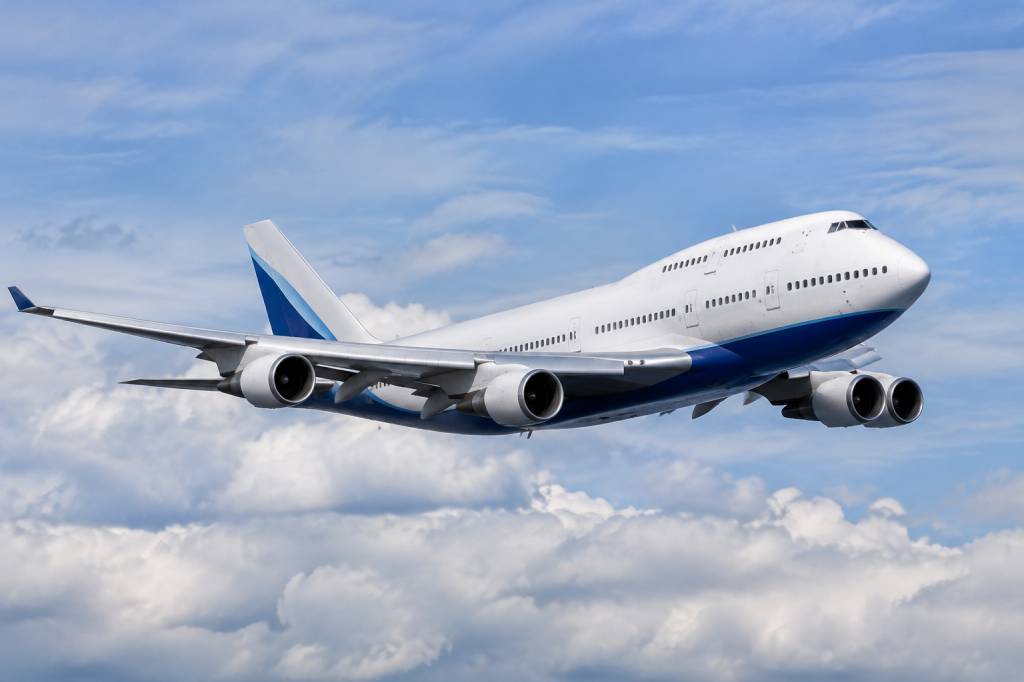
When the Boeing 747 entered service in 1970, its scale was difficult to miss. It was the first wide-body passenger jet in commercial service and could carry far more people than earlier airliners. The distinctive upper-deck hump was initially designed in part to allow a freight door in the nose, but it became the aircraft’s signature feature.
By increasing capacity, the 747 helped airlines lower the cost per seat on busy routes and made international travel available to a wider market. It also reshaped airports: terminals, gates and runways had to cope with larger aircraft and passenger flows. A plane can change the experience at 35,000 feet and the design of the building at the airport.
For decades, the 747 served as a passenger workhorse, a cargo aircraft and a high-profile government transport. Its passenger role has declined as airlines have favoured smaller, more fuel-efficient twin-engine jets, but its contribution to mass air travel remains hard to overstate.
Cessna 172: the everyday training aircraft
Not every influential aircraft carries hundreds of passengers or flies across oceans. The Cessna 172, first flown in 1955, became one of the world’s most recognisable light aircraft and a common choice for pilot training. More than 44,000 have been built, making it one of the most-produced aircraft in history.
Its high-wing layout, relatively straightforward handling and ability to take off and land on comparatively short runways made it useful for flight schools and private pilots. It has also served in utility roles, from aerial observation to moving people and supplies in regions with limited transport options.
The 172 matters because aviation depends on more than airline fleets. Pilots need a place to learn, and communities need aircraft suited to local conditions. A training aircraft may never appear on a glamorous airport billboard, but it can introduce generations of people to flying.
Concorde: supersonic travel, with a demanding price tag
Concorde carried fare-paying passengers faster than the speed of sound, with a cruising speed of about Mach 2.02. Developed jointly by British and French manufacturers, it entered commercial service in 1976. A scheduled journey between London and New York could take around three and a half hours, depending on conditions.
That speed came with trade-offs. Concorde’s delta wing, slender fuselage and powerful engines were designed for supersonic flight, but the aircraft used a great deal of fuel and generated a sonic boom. Restrictions on overland supersonic flying limited where it could operate at full speed. Its small passenger capacity and high operating costs kept tickets expensive.
Concorde retired in 2003, following a combination of commercial, operational and industry pressures. It never became the future of everyday air travel, but it proved that regular supersonic passenger service was possible. It also showed that technical possibility and economic practicality are not the same thing.
Boeing 737: the short-haul workhorse
The Boeing 737 entered airline service in 1968 and became a fixture on domestic and regional routes. Its compact size suited shorter trips and smaller airports than those typically served by the 747. Over time, new generations brought changes to engines, avionics, cabin design and range.
For passengers, the 737 is often simply the plane waiting at the gate. For airlines, its popularity has meant a broad operating base, a large pool of trained pilots and maintenance staff, and many versions to choose from. Those factors helped make it a central aircraft for carriers around the world.
The type has also faced serious scrutiny. Two fatal crashes involving the 737 MAX in 2018 and 2019 led to a global grounding and widespread questions about aircraft certification, training and safety oversight. The episode is a reminder that a long production history does not remove the need for rigorous checks when a design is updated.
Airbus A320: fly-by-wire reaches the airline mainstream
When the Airbus A320 entered service in 1988, it introduced digital fly-by-wire controls to a commercial airliner in a prominent way. Instead of a direct mechanical link between pilot controls and the aircraft’s control surfaces, electronic systems process pilot inputs and operate those surfaces.
The A320 family also became known for its common cockpit design across different models. That approach can make it easier for airlines to move pilots between aircraft in the family, subject to appropriate training and regulatory requirements. The aircraft’s continuing development has kept it in service on short- and medium-haul routes worldwide.
Fly-by-wire did not mean that computers took over the job of flying. Pilots remain responsible for controlling the aircraft, while onboard systems help manage its response and protect it from certain operating limits. The A320 helped make digital flight controls a familiar part of commercial aviation rather than an experimental idea.
Boeing 787 Dreamliner: long routes with fewer passengers
The Boeing 787 Dreamliner was designed around a different commercial idea: use a long-range, fuel-efficient aircraft to connect cities directly, without needing a jumbo jet full of passengers. Its first commercial flight took place in 2011. The aircraft’s structure uses a large proportion of composite materials, alongside modern engines and updated systems.
That combination helped airlines open or expand routes that might not have supported a larger aircraft. For passengers, the 787’s cabin design includes features such as larger windows and higher cabin humidity than on many older aircraft. The exact experience varies by airline, because seat layout and cabin features are not identical across fleets.
The aircraft also faced delays and technical problems during development and early service, including battery-related incidents that led to a temporary grounding in 2013. Its story is therefore not a simple tale of flawless innovation. It shows the potential—and the scrutiny—that come with introducing new materials and systems at scale.
What makes an aircraft’s influence last?
These ten aircraft changed aviation in different ways. The Wright Flyer established controlled powered flight. The DC-3 helped airlines become viable. The 707 and 747 accelerated global travel, while the Cessna 172 supported the training and general aviation that sit beyond major airports. Concorde pushed speed to its limits; the A320 and 787 helped redefine how modern airliners are controlled and deployed.
There is no single measure of a “best” aircraft. Ask what mattered most and the answer changes: passenger numbers, technical innovation, safety, operational flexibility or the ability to make a new route commercially workable. The clearest test is simpler: did the aircraft change what people could do, and did that change last?
À propos de l'auteur