Batch-cooking ideas to save time and money in the kitchen while eating better every day
Spending your Sunday chopping vegetables and portioning food doesn’t vraiment faire rêver. But if every weekday at 7:43 pm you find yourself staring at an empty fridge, scrolling Deliveroo with a vague sense of guilt, batch cooking starts to look less like a TikTok trend and more like a survival strategy.
Batch cooking is simple in theory: cook more, less often. In practice, it’s a smart system that can help you:
- Cut your food budget by 20–40% (by reducing impulse buys and takeaways)
- Save 4 to 6 hours per week in the kitchen
- Eat better without having to “be motivated” every single day
Let’s walk through a realistic, no-nonsense version of batch cooking: how to set it up, what to cook, how to store it, and how to avoid turning your fridge into a graveyard of sad Tupperware.
Why batch cooking actually works (and where it usually fails)
The promise: spend 2–3 hours one day, and your meals are sorted for the week. The reality: most people give up after two tries because they’ve cooked 12 identical portions of bland pasta and can’t face eating them again.
Batch cooking works if you respect three basic rules:
- You cook components, not full meals only
- You accept a bit of repetition, but not seven carbon copies of the same dish
- You set a system that fits your real life, not your fantasy life
This means moving from “I’ll make 6 lasagnas and survive on that” to “I’ll prep grains, proteins, sauces and vegetables I can recombine in 10 minutes”. The goal isn’t perfection; it’s to make the healthy option the default when you’re tired, late and hungry.
The 3 levels of batch cooking (pick the one you’ll actually do)
Not everyone wants to spend half a day cooking. Good news: you don’t have to. Think of batch cooking in three levels of commitment and choose what matches your week.
- Level 1 – “Future me will thank me” (30–45 minutes)
You double or triple what you’re already cooking tonight. Extra rice, extra roast veggies, extra chicken. You portion and store. No special session, just a habit. - Level 2 – “Sunday prep light” (1.5–2 hours)
You dedicate one slot in the week (often Sunday) to prepare bases: grains, roasted vegetables, one or two proteins, a soup, and a sauce or two. You don’t cook all your meals, you just remove 80% of the work for future you. - Level 3 – “Full factory mode” (3–4 hours)
You plan and cook almost everything for 4–5 days: lunches plus some dinners. This is effective but intense; it’s usually easier to maintain for people with very predictable routines (fixed office hours, kids’ schedules, etc.).
If you’ve never done it before, start with Level 2. You get the benefits without turning your kitchen into a canteen.
The smart shopping list: how to save money before you even cook
Batch cooking without planning is just “cooking a lot and hoping for the best”. To actually save money, you need a minimal but deliberate shopping list. Here’s a modular framework you can reuse every week.
1. Choose 2 grains or starches (cheap and filling):
- Brown rice, quinoa, bulgur, couscous
- Wholewheat pasta
- Potatoes or sweet potatoes
2. Choose 2–3 proteins (animal and/or plant-based):
- Chicken thighs (cheaper and more forgiving than breast)
- Eggs (omelettes, frittatas, hard-boiled)
- Lentils, chickpeas, beans (canned or dry)
- Tofu or tempeh if you like them
- Frozen fish (often cheaper than fresh and perfect in curries or trays)
3. Fill up on versatile vegetables (fresh and frozen):
- Carrots, onions, garlic, leeks, bell peppers
- Broccoli, cauliflower, green beans (fresh or frozen)
- Leafy greens (spinach, kale, mixed salad)
- Canned tomatoes (indispensable for sauces, stews, curries)
4. Don’t forget fats and flavour (this is where “healthy but sad” happens):
- Olive oil or rapeseed oil
- Spices: paprika, curry, cumin, oregano, thyme, chilli
- Mustard, soy sauce, vinegar, lemon
- Plain yogurt, coconut milk (for sauces)
The idea is simple: this base allows for dozens of combinations. Instead of buying specific ingredients for specific recipes (and letting half of them rot), you build a flexible “kit” you’ll reconfigure all week.
A 2-hour batch cooking plan for 4–5 days of better meals
Let’s get concrete. Here’s a realistic 2-hour session that fits into most small kitchens and normal budgets. Adjust quantities depending on how many people you feed.
What you’ll cook:
- 1 big tray of roasted vegetables
- 1 base grain (e.g. brown rice) + 1 quick starch (e.g. couscous or potatoes)
- 2 proteins (one animal, one plant-based)
- 1 pan of “everything” tomato sauce
- 1 soup for evenings or lunches
Step 1 – Launch what takes longest
- Start cooking brown rice or another grain in a big pot.
- Preheat the oven, chop vegetables (carrots, peppers, onions, broccoli, courgettes, etc.) and spread on two trays. Add oil, salt, pepper, herbs. Put them in the oven for 25–35 minutes.
While these cook, you’re already working on the rest.
Step 2 – Prepare your proteins
- Protein 1 (animal): marinate chicken thighs with olive oil, lemon, garlic, paprika or curry. Spread them on a tray and slide them into the oven as soon as the vegetables are out.
- Protein 2 (plant-based): rinse a big can of lentils or chickpeas, sauté them in a pan with garlic, onion, spices and a little tomato paste. You now have a base that works in salads, bowls, wraps and curries.
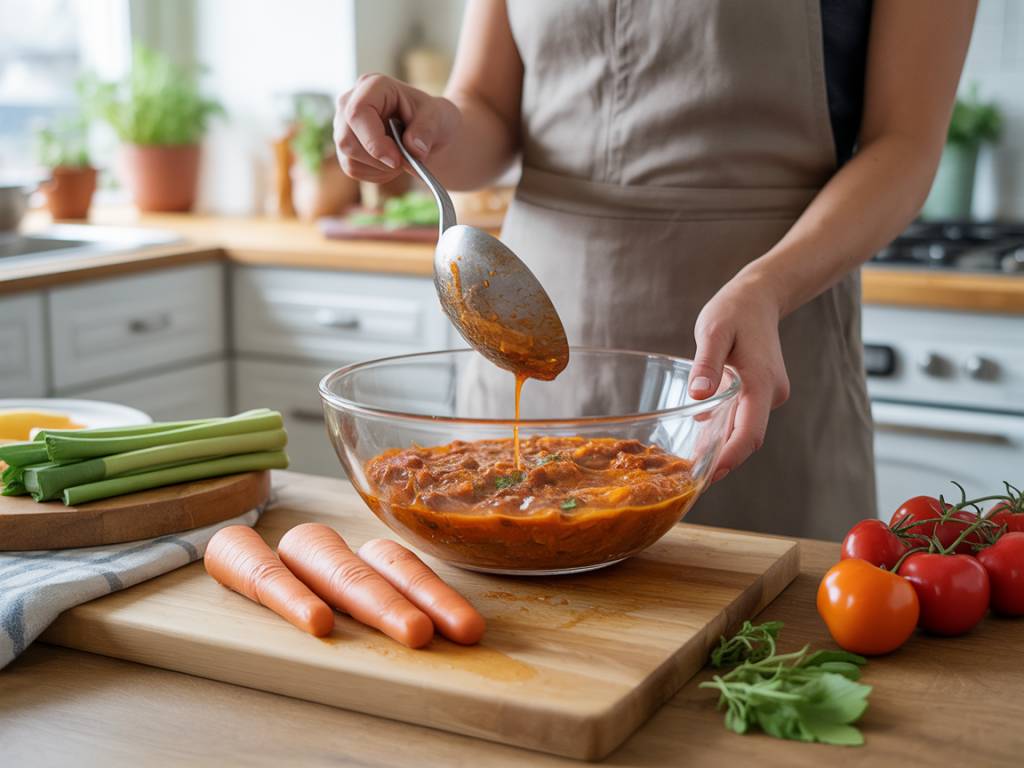
Step 3 – Make a big “everything” tomato sauce
- In a pot, sauté onions and garlic, add canned tomatoes, herbs, a splash of olive oil, a pinch of sugar or grated carrot to balance the acidity.
- Let it simmer 20–30 minutes. You can throw in leftover chopped veggies or a handful of lentils for extra fibre.
This single sauce can become pasta sauce, shakshuka base (add eggs), curry starter (add spices and coconut milk), or topping for baked potatoes.
Step 4 – Blend a simple soup
- In another pot, combine chopped vegetables you have (carrots, leeks, potatoes, frozen peas…), cover with water or stock, add salt, pepper, herbs.
- Simmer 20 minutes, blend or leave chunky. Store in jars or Tupperware.
Step 5 – Cool and portion smartly
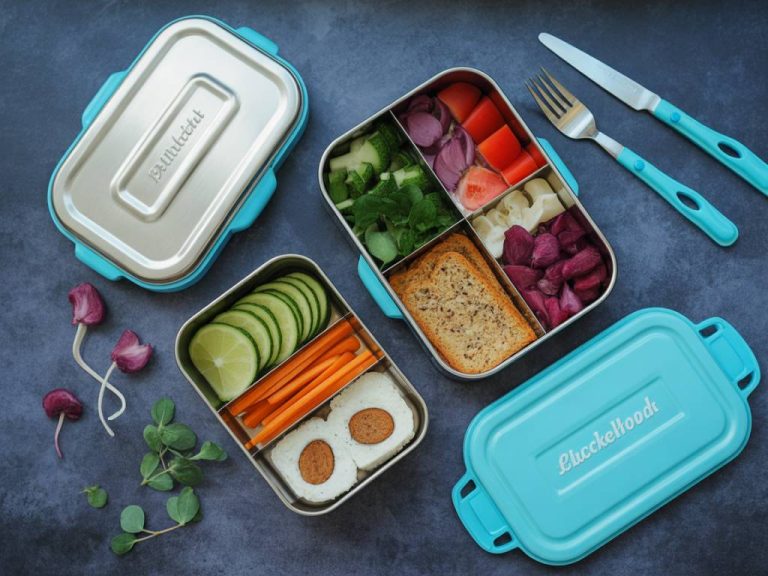
Once everything is cooked, let it cool (no lids while still steaming, otherwise you’ll create a condensation swamp), then portion:
- Grains in 3–4 boxes
- Roasted vegetables in 2–3 boxes
- Proteins in boxes or sliced for wraps/salads
- Tomato sauce in jars or smaller containers
- Soup in 2–3 portions (you can freeze one)
You haven’t technically “cooked full meals” – but you’ve made your weekday self’s life infinitely easier.
7 concrete meal ideas from the same batch
What do you actually eat with all that? Here are ways to turn the same bases into different plates in under 10–15 minutes.
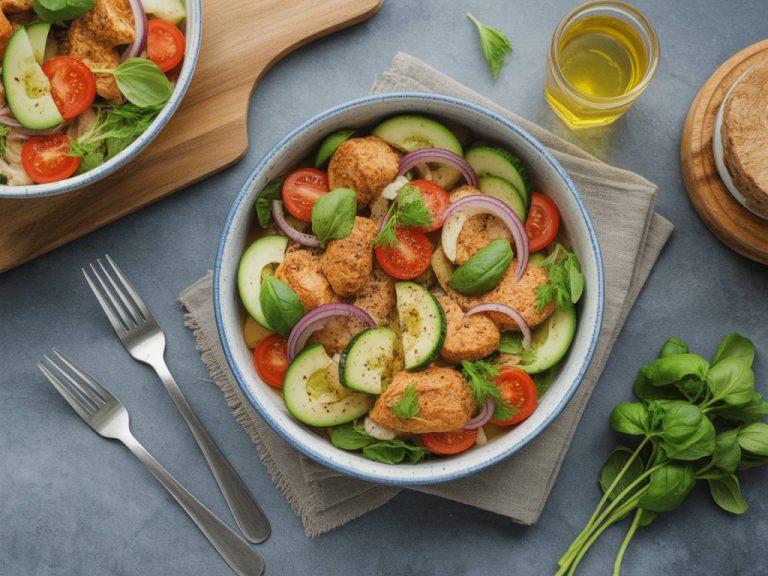
- Roasted veggie grain bowl
Brown rice + roasted vegetables + chickpeas + yogurt sauce (yogurt, lemon, garlic, herbs). Optional: add seeds or nuts. - 10-minute tomato pasta
Reheat tomato sauce, cook pasta while it simmers, top with grated cheese or nutritional yeast and some roasted veg. - Chicken wrap or pita
Slice baked chicken, add to a wrap with salad leaves, roasted peppers, a spoon of tomato sauce or yogurt sauce. Done. - Shakshuka-style breakfast-for-dinner
Reheat tomato sauce in a pan, make small wells, crack eggs, cover until set. Serve with bread or leftover couscous. - Simple curry in 12 minutes
In a pan, heat tomato sauce with curry powder or paste, add coconut milk and chickpeas or lentils, plus some frozen spinach. Simmer, serve with rice. - Tray-bake “new” dinner
On a tray, combine leftover roasted vegetables, sliced potatoes, chunks of chicken, a drizzle of olive oil and herbs. Reheat under the grill. It feels freshly cooked, while your dishwasher knows the truth. - Soup + toast “emergency” meal
For nights when you have zero energy: reheat soup, add a boiled egg or grated cheese, serve with toast or avocado on bread. Better (and cheaper) than ordering in.
Notice the pattern: nothing fancy, just modular assembly with flavour boosters.
How batch cooking saves (real) money
You already know home cooking is cheaper than takeaway. But batch cooking does more than that: it attacks hidden costs.
- Fewer “emergency” meals
Those last-minute deliveries are disproportionately expensive: delivery fees, minimum order amounts, “might as well get a dessert”… One unplanned takeaway per week can easily cost £40–£60 per month. - Less food waste
In the UK, the average household throws away food worth roughly £700 per year. Batch cooking forces you to think in “how will I use this in three ways?” rather than “this recipe looks nice on Instagram”. You buy for a system, not for a single dish. - Lean into the cheap but healthy basics
Beans, lentils, grains, eggs, frozen veg: these are nutritional bargains. When they’re your base, you can afford to occasionally splurge on good cheese, quality olive oil or nicer cuts of meat – without blowing the monthly budget.
Is it free? No: it costs you 1.5–2 hours of your time. The question is whether that time buys you less stress, better food and a bit more money left at the end of the month. For most people who try it seriously for a month, the answer is yes.
Storage, safety and the “how long can I keep this?” question
Nothing kills enthusiasm like reheating something that smells suspicious. A few rules keep you on the safe side.
In the fridge (0–4°C):
- Cooked grains: 3–4 days
- Cooked vegetables: 3–4 days
- Cooked meat or fish: 3–4 days
- Soups and sauces: 3–4 days (longer if well boiled and reheated thoroughly, but don’t push it)
In the freezer (-18°C or below):
- Cooked grains: up to 1 month
- Cooked vegetables: 2–3 months
- Soups, stews, sauces: 2–3 months
Basic practices that make a real difference:
- Cool food quickly (within 2 hours) before refrigerating.
- Use shallow containers so food doesn’t stay lukewarm in the middle.
- Label boxes with what and when (today + 3 days is a good mental deadline).
- Reheat until piping hot (especially rice and meat).
Speaking of rice: it can cause food poisoning if left for hours at room temperature. Cool it fast, refrigerate as soon as possible, and don’t reheat it more than once.
How to avoid getting bored (and giving up)
The main enemy of batch cooking is repetition. No one wants to eat the same bowl every lunch for five days. A few levers help maintain variety without starting from scratch.
- Seasonal rotation
Keep the structure (grain + protein + vegetables + sauce) but rotate according to the season: root veggies and hearty soups in winter, lighter grains and fresh salads in summer. - Sauce is king
Tiny jars, big impact. With a neutral base, changing the sauce changes the dish:- Yogurt + lemon + garlic + herbs
- Peanut butter + soy sauce + lime + honey + water
- Olive oil + mustard + vinegar + herbs
- Tahini + lemon + garlic + water
These take 2–3 minutes and keep your bowls from tasting like sad leftovers.
- Two themes per week
Instead of aiming for total originality, pick 2 broad themes and ride them: for example “Mediterranean + Middle Eastern” one week (tomato, lemon, herbs, chickpeas), “Asian-inspired + Tex-Mex” the next (soy, ginger, curry, beans, corn). It naturally guides your spices and assembly.
Think of it like a wardrobe: you’re mixing and matching pieces, not buying an entirely new outfit every day.
Batch cooking when you hate cooking (or have almost no time)
If you read all this thinking “Nice, but I barely manage toast”, here’s the stripped-down version.
Non-cooking batch cooking (15–20 minutes):
- Boil a dozen eggs.
- Cook a big pot of pasta or couscous.
- Open canned beans or lentils, rinse and store.
- Buy pre-cut salad or coleslaw mix, plus cherry tomatoes and carrots.
- Use ready-made hummus, pesto, or tomato sauce.
From this, you can make:
- Pasta + pesto + cherry tomatoes
- Salad bowl (lettuce, beans, egg, carrots, dressing)
- Couscous + beans + hummus + raw veg
- Toast + hummus + tomato + egg
Is it Michelin-star cuisine? No. Is it cheaper and better for you than most last-minute takeaway? Without question.
Turning batch cooking into a habit, not a one-off experiment
The real win isn’t one heroic Sunday in the kitchen; it’s turning this into a repeatable system. A few anchors help:
- Book it in your calendar
Treat your prep session like any other appointment. If you wait for “a free moment”, you know exactly how that ends. - De-brief every week (2 minutes)
Ask yourself: what did I actually eat? What stayed untouched? Adjust. If the soup kept being ignored, make half the amount next time and more roasted veg instead. - Prepare future-you’s favourites
There should always be at least one thing you genuinely look forward to. A good curry, a pasta, a particular sauce. If every box feels like punishment, the system will collapse. - Allow for flexibility
Leave slots open for a spontaneous dinner out or a craving. The aim isn’t to lock yourself into a food prison; it’s to ensure that on “default” days, you’re covered.
Batch cooking is neither a religion nor a personality trait. It’s a tool. Used well, it buys you time, frees mental space, and makes the healthy, budget-friendly option the easiest one on your busiest days.
The question isn’t “Am I the kind of person who batch cooks?” but rather: “Can I give myself a 2-hour head start on a week where everything else will already be demanding enough?”
À propos de l'auteur