Economy standard: what it means and how it compares with other options
“Economy standard” sounds straightforward: a seat in the main cabin, at the regular economy fare. But the label can hide important differences. On one airline, it may include a checked bag and free seat selection; on another, those extras cost more. The same flight can also offer basic economy, premium economy, business and first class, each with a different mix of price, space and flexibility.
So what are you actually buying when you book economy standard, and when is it worth paying for another option? Here is a practical guide to comparing fares before the cheapest-looking ticket turns into a more expensive one.
What does economy standard mean?
Economy standard is generally the airline’s regular economy fare: a seat in the main cabin with the usual onboard service for that route. You get a seat, a seat belt and access to the flight’s standard cabin facilities. Beyond that, the details depend on the airline, the route and the ticket rules.
On a short-haul flight, a standard economy ticket might include a small personal item but charge for a cabin bag, checked luggage and advance seat selection. On a long-haul flight, the fare may include checked baggage, meals and a larger cabin-bag allowance. Neither arrangement is universal, so the fare name alone is not enough to judge what is included.
Think of “economy standard” as a starting point, not a promise of identical benefits everywhere. Before paying, check the conditions shown for your specific flight.
What is usually included—and what may cost extra?
Most standard economy fares include transport in the economy cabin and a standard seat assignment, although the airline may choose the seat for you. Many also allow one small personal item, such as a bag that fits under the seat in front. The rest can vary.
-
Cabin baggage: Some fares include a full-sized cabin bag; others permit only a small under-seat item unless you pay to upgrade.
-
Checked baggage: It may be included, especially on some long-haul routes, or charged separately.
-
Seat selection: You may be able to choose a seat for free at check-in, while choosing earlier or sitting with companions can cost extra.
-
Changes and cancellations: A standard fare may allow changes for a fee, but the cheapest versions can be restrictive. Refund rules also vary.
-
Food and drinks: Long-haul flights commonly include meals, while short-haul service may be limited or available to buy.
-
Frequent-flyer benefits: Earning points or qualifying credit depends on the airline, ticket type and loyalty programme rules.
One useful habit: open the airline’s baggage and fare conditions before booking, not after. If you are comparing tickets on a travel website, confirm the final details with the airline too. A booking summary that says “baggage included” is only helpful if it specifies which baggage and how much.
Economy standard versus basic economy
Basic economy is typically the most restrictive economy fare. It is designed for travellers who want a low headline price and are willing to accept fewer choices. Depending on the airline, it may limit carry-on baggage, seat selection, changes, refunds or boarding priority.
Standard economy usually offers more flexibility or includes more of the basics, but the boundary between the two is not consistent. One carrier’s standard fare may include a checked bag; another’s may charge for it. Some airlines also use different names, such as “Light,” “Saver” or “Basic,” for fares with similar restrictions.
Imagine two tickets priced £35 apart. The cheaper one excludes a cabin bag and assigns your seat at check-in. If adding the bag costs £30 and selecting a seat costs £12, the apparent saving disappears. If you are travelling with someone and want to sit together, that seat charge can matter more than it would for a solo passenger.
Basic economy can still be a sensible choice when you are travelling light, do not care where you sit and are confident your plans will not change. Standard economy is often the safer comparison when you need a bag, want to choose a seat or value the option to alter your booking.
Economy standard versus premium economy
Premium economy is a separate cabin on many long-haul aircraft, rather than simply a better seat in the main cabin. It often offers wider seats, more legroom, greater recline and additional service touches. The exact benefits vary: some airlines provide a noticeably more spacious seat and upgraded meals, while others offer a smaller improvement.
The price difference can be substantial. Before upgrading, compare the seat specifications, baggage allowance, airport benefits and change rules—not just the phrase “extra comfort.” A few extra centimetres of legroom may be valuable on a ten-hour flight. On a two-hour trip, the same upgrade might feel harder to justify.
Premium economy is most compelling when comfort is a priority and the cost fits your budget. It can also be worth considering if the fare includes useful extras you would otherwise buy. But do not assume that it includes lounge access or priority services: those benefits are not guaranteed.
Economy standard versus business and first class
Business class usually brings a larger jump in comfort and service. On many long-haul routes, the seat may recline into a fully flat bed, with upgraded meals, priority airport services and more generous baggage rules. On shorter routes, business class can be a seat in the same cabin as economy with the neighbouring seat left empty, plus different service and airport benefits.
First class, where offered, sits above business class and is typically the most premium option. It may provide more space, more privacy and highly personalised service. However, not every airline or aircraft has a first-class cabin, and the product can differ dramatically between routes.
These cabins are not simply “better versions” of economy standard; they serve different needs and budgets. For an overnight flight before an important meeting, a lie-flat business-class seat may have practical value. For a short daytime journey, paying several times more may buy little beyond a meal and a quieter boarding process.
How to compare the real cost
The fare shown in search results is not always the amount you will spend. To compare options fairly, calculate the total for the trip you actually plan to take.
-
Add the baggage you need. Check both outbound and return charges, and confirm size and weight limits.
-
Include seat fees if they matter. If you need to sit with a child or travel companion, price that requirement into every option.
-
Check flexibility. Look at change fees, fare differences and refund eligibility. A flexible ticket may be valuable if your dates are uncertain.
-
Compare the full journey. A low fare with an inconvenient departure time, long connection or distant airport can cost more in time and transport.
-
Review payment and service charges. These may appear late in the booking process, so check the final total before confirming.
For example, a traveller taking a weekend trip with only an under-seat bag may find a restrictive fare perfectly adequate. A family going away for a week may need checked luggage, seats together and greater flexibility. The same fare that is a bargain for the first traveller can be poor value for the second.
Is standard economy comfortable enough?
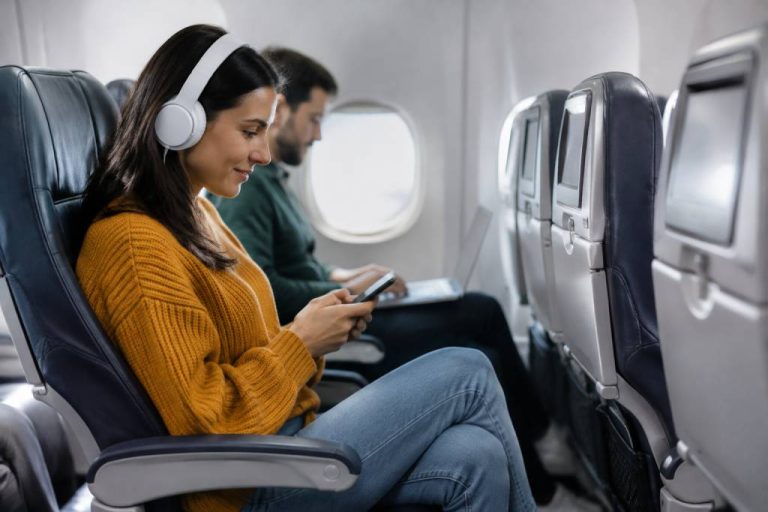
That depends on the aircraft, the route, your height, how long you will be seated and what you personally find uncomfortable. Economy seats are designed to fit many passengers into a cabin, so space is limited compared with premium cabins. Seat width and pitch—the distance from one seat row to the same point on the next—vary by aircraft and airline.
For a longer flight, check the seat map and aircraft details where available. An exit-row seat may offer more legroom, but it can have restrictions and may cost extra. Seats near a galley or lavatory can mean more noise and foot traffic. A window seat offers a place to rest your head; an aisle seat makes it easier to stand up without asking a stranger to move. Small choices, but they can shape several hours of travel.
Seat maps are not guarantees. Aircraft can change, and airlines may reassign seats. If a particular seat is essential, review the carrier’s policy rather than assuming your selection is permanent.
When should you choose economy standard?
Standard economy is often the best balance when you want a reasonable fare without accepting the tightest restrictions. It can make sense if you need a checked bag, prefer to select a seat or want more flexibility than a basic fare provides.
It may not be worth paying extra if the added benefits duplicate what you do not need. A checked-bag allowance has little value when you are travelling with a backpack. Advance seat selection may not matter if you are happy with any available seat. Likewise, a flexible fare can be wasted money if your plans are fixed and the price difference is large.
Ask yourself three practical questions before choosing:
-
What baggage will I actually take?
-
Do I need to choose a seat or sit beside someone?
-
How likely is it that I will need to change or cancel the trip?
Your answers are more useful than the fare label. If the standard ticket includes benefits you will use, it may be worth the extra cost. If not, a cheaper fare can be perfectly sensible.
What to check before you book
Airline fare rules can change, and the same carrier may sell different conditions on different routes. Before paying, confirm the baggage allowance, seat-selection rules, change and refund conditions, and any restrictions on boarding or carry-on items. Check the total price for every passenger, not just the headline fare for one person.
Also pay attention to who operates the flight. A ticket sold by one airline may be flown by a partner, whose baggage rules or cabin details can differ. If your trip includes connections, verify the rules for each leg and allow enough time between flights.
Economy standard is neither automatically a bargain nor a poor deal. It is a bundle of practical benefits, and the value depends on whether those benefits match your trip. Compare the complete cost, check the restrictions, and choose the cabin and fare that solve your actual travel problem—not the one with the most appealing name.
À propos de l'auteur