


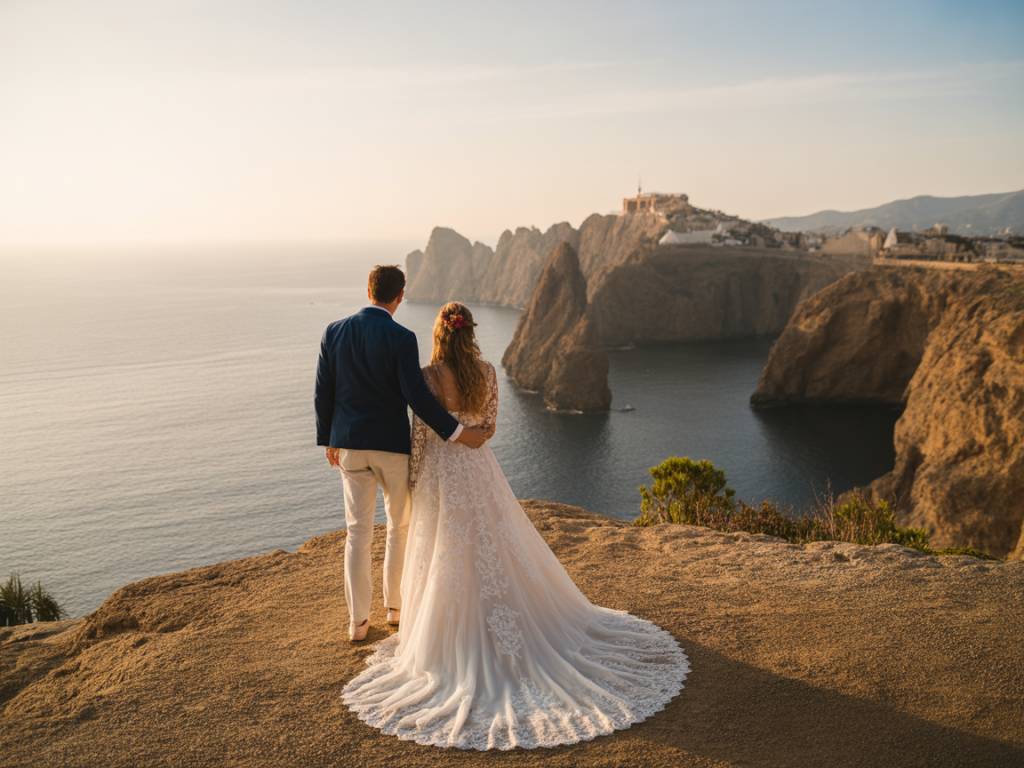
You already know you want Spain: sun, late dinners, music in the streets, a glass of Rioja in hand. But how do you turn that vague postcard image into a real wedding trip destination that your guests will remember for years – without tripling your budget or losing your sanity in WhatsApp groups?
Let’s treat it like what it is: a project. With a clear brief (food, culture, romance), a few constraints (time, money, guests) and a lot of options. Here’s how to plan a Spanish wedding trip that feels cinematic, not chaotic.
First question: what kind of “wedding trip” are you planning?
Before you fall in love with a whitewashed village on Instagram, define the format. In Spain, three models work particularly well:
- Elopement + mini-moon: Just the two of you (maybe a photographer), a short ceremony, then a week on the road. Maximum romance, minimum logistics.
- Intimate wedding + group trip: 20–40 guests, one main event (ceremony + dinner) and 2–3 shared activities around it. Good balance between “we’re together” and “we’re on holiday”.
- Destination wedding + long week-end: 60+ guests, a welcome dinner, the wedding day, maybe a farewell brunch. You’ll need more structure, transport and budget.
Your choice impacts everything: region, budget, accommodation type, and even the tone of the trip. If your priority is romance and food, smaller often means better: less time on coordination, more time with a glass of vermut in front of a sunset.
Choosing the right region in Spain: atmosphere before aesthetics
Spain is basically several countries hiding under one name. To avoid paralysis by analysis, focus on three filters:
- Atmosphere: Do you want seaside chic, rural slow life, or urban energy?
- Access: How easy is it for your guests to fly/train there?
- Weather: Not just “sunny” vs “rainy”, but actual temperatures in wedding clothes.
Some solid starting points, depending on your vibe:
- Andalusia (Seville, Granada, Málaga): For couples who want Moorish palaces, flamenco in the streets, orange trees, and long golden evenings. Amazing in April–May and late September–October. Avoid mid-summer unless you love 40°C.
- Catalonia (Barcelona, Costa Brava, Girona): Foodie paradise with strong design and culture. Think modernist architecture, wine country, and cliffside coves. Easy access via Barcelona airport. Can be busy (and pricey) in July–August.
- Basque Country (San Sebastián, Bilbao): For serious food lovers. Pintxos bars, Michelin stars, green hills and Atlantic beaches. Weather more changeable, but that also means fewer heatwaves.
- Baleares (Mallorca, Menorca, Ibiza): If “romance” for you means coves, boats and sunsets. Menorca is quieter and more laid-back, Ibiza can be surprisingly calm off-club zones, Mallorca offers the most variety.
- Madrid & Castilla: For culture-heavy trips: museums, royal palaces, day trips to Toledo or Segovia. Great restaurants and rooftop bars; more urban romance, less beach towel.
Ask yourself: “Would I still want to be here if the wedding got cancelled and it was just our holiday?” If the answer is yes, you’re in the right region.
When to go: the sweet spot between prices, crowds and sweat
Spain is not just “hot in summer”. For a wedding trip, three metrics matter: comfort, cost, and crowd level.
Best windows for a romantic, food-centric trip:
- April–May: Blossoms, longer days, and reasonable temperatures almost everywhere. Easter weeks can be more crowded, especially in Andalusia.
- Late September–October: Sea still warm in most coastal areas, lower prices than peak summer, softer light (photographers love this).
Windows to approach with caution:
- July–August: More tourists, higher prices, and serious heat in the south and interior. Good if most guests are teachers/parents bound by school holidays, but plan for shade and siestas.
- Winter: Can be romantic in cities (Madrid, Seville, Barcelona), with Christmas lights and fewer crowds. Less ideal for beach-oriented trips or late-night outdoor dinners.
Check local calendars too. A feria in Seville or San Sebastián’s film festival might sound appealing, but they also mean higher prices and booked-out hotels.
Budget reality check: what does a Spanish wedding trip actually cost?
There’s no universal number, but averages help with planning. Per person, for a 4–5 day trip, excluding international flights, you’re broadly looking at:
- Budget-conscious: £70–£110 per day (guesthouses, tapas-based meals, public transport, simple activities).
- Comfortable: £120–£220 per day (4-star hotels, a mix of tapas and sit-down dinners, some private tours or wine tastings).
- High-end: £250+ per day (boutique hotels or fincas, private drivers, tasting menus, boat charters, etc.).
For the wedding event itself, a lot depends on venue, guest count and region. But compared to the UK, many couples find they can either:
- Keep the same budget and upgrade the experience (better food, better setting, more days together).
- Reduce the guest list and keep only the people who really matter, which often lowers stress as much as cost.
Tip: communicate early and clearly about expected costs for guests (typical hotel range, transfers, dress code). People appreciate knowing whether this is a “simple seaside escape” or “black-tie in a vineyard”.
Building an itinerary that balances romance, food and culture
The main risk of a destination wedding trip? Over-scheduling. Your guests didn’t fly to Spain to sit in buses. Aim for one anchor activity per day, maximum.
Here’s a simple 4-day structure that works in most regions:
- Day 1 – Arrival & soft landing: Informal welcome drinks or a tapas crawl near the hotel. No speeches, no dress code, just time to arrive and decompress.
- Day 2 – Culture day: A guided city walk, visit to a palace or cathedral, or a local market tour. End with a group dinner at a restaurant or bodega.
- Day 3 – Wedding day: Ceremony + reception. Keep logistics simple: minimal travel between locations, clear timings, and attention to heat/shade.
- Day 4 – Relaxation & farewell: Late brunch, beach or pool downtime, optional activity (boat trip, wine tasting, rural walk), then guests peel off.
Adapt this framework to your style. More “food” than “sightseeing”? Swap the palace visit for a cooking class or vineyard tour. More “romance” than “group time”? Make several activities optional and plan a private evening just for the two of you.
Food: turning every meal into a highlight, not just the wedding dinner
If food is a central pillar of your trip (you’re in Spain, it should be), think beyond the reception menu. Use meals to tell a story about the region.
Good bets depending on where you are:
- Andalusia: Salmorejo, fried pescaíto, sherry tastings in Jerez, rooftop tapas in Seville. Flamenco tablaos with dinner can be touristy – ask locals or your planner for places where locals also go.
- Catalonia: Seafood rice on the Costa Brava, calçots (in season), vermut in neighbourhood bars in Barcelona, market-to-table lunches in Girona.
- Basque Country: Pintxos “tours” in San Sebastián’s Parte Vieja, cider house dinners (sidrerías), tasting menus in small villages around the coast.
- Baleares: Fresh fish, sobrasada, local cheeses, rustic lunches in inland villages, beach chiringuitos at sunset.
To avoid disappointment:
- Book key meals in advance, especially if you’re 10+ people. Many Spanish restaurants are not designed for last-minute large tables.
- Mix formal and informal: one or two “wow” dinners and plenty of casual tapas nights where people can move, mingle and order at their own pace.
- Factor in Spanish schedules: Locals eat late. A 19:00 dinner can mark you as a tourist, but an 22:00 start can be brutal for older guests or kids. Aim for a compromise (20:00–20:30) and warn guests in advance.
Culture without the museum fatigue
“Culture” doesn’t have to mean dragging your guests through five churches a day. Spain offers plenty of ways to weave history and arts into the trip without boredom.
Options that tend to work even for mixed-age groups:
- Short, focused walking tours (1.5–2 hours) with a guide who tells stories, not just dates. City old towns, markets, or specific neighbourhoods (like Barcelona’s El Born or Seville’s Santa Cruz).
- Iconic but limited visits: Alhambra at sunset, Sagrada Família with a timed ticket, Guggenheim in Bilbao with a clear “start” and “finish”, rather than museum marathons.
- Light experiences: wine or olive oil tastings that include some history, local music performances, traditional boat trips, a simple language class over coffee.
Ask guides or planners specifically: “What would you show to a group that has never been here, in 90 minutes, to make them fall in love with the place?” Then cut anything that feels like homework.
Romance: carving out time for two in the middle of everything
With a group around, it’s surprisingly easy to forget that this is your wedding trip. Between questions about transfers and table plans, your couple time can evaporate.
Some ways to protect it:
- Block a “no-guest” evening in the middle of the trip. Book a special restaurant or sunset activity just for the two of you. Communicate it clearly so nobody feels excluded: “Thursday is our private evening – see you at breakfast!”
- Choose accommodation with private corners: a room with a terrace, a boutique hotel with a quiet rooftop, or a rural house where you can have coffee alone in the garden before the group wakes up.
- Delegate guest logistics (airport pick-ups, lost luggage, restaurant directions) to a planner, a trusted friend, or a WhatsApp group admin. Your job is not “tour operator in chief”.
Romance doesn’t always mean grand gestures. In Spain it can be as simple as a slow morning, a nap after lunch, or a late walk through a lit-up plaza after everyone else has gone to bed.
Accommodation: hotel, villa or “pueblo” life?
Your choice of base will shape how the trip feels for everyone.
- Hotels (city or resort): Best for ease and flexibility. Good when guests have different budgets – some can choose superior rooms, others standard. Ask about group rates, breakfast times, and late check-out options around the wedding day.
- Rural houses or fincas: High on charm and intimacy, particularly in Andalusia, Mallorca or Catalonia’s countryside. Check access (do you need rental cars?), noise rules (for late nights), and back-up plans for bad weather.
- Small coastal towns or villages: Let guests book their own places (Airbnbs, small hotels) but within walking distance of each other. Choose somewhere with at least a few restaurants, a mini-market, and transport links.
For mixed groups, it often works well to:
- Have a “main” hotel where you stay and where some events take place.
- Provide a short list of alternative accommodations at different price points within 10–15 minutes’ walk.
- Map everything clearly in a shared document: locations, walking times, and nearest bus/metro stops.
Logistics that quietly make or break the experience
Romance is in the details. Unfortunately, so are the problems. A few operational questions to settle early:
- Transport: Will you organise transfers for everyone from the airport/train station, or just share instructions? For rural venues, consider at least one group shuttle on arrival and departure days, plus night-time shuttles on the wedding day.
- Communication: Create one central info point: a simple PDF, Notion page or mini-website with schedules, maps, emergency contacts and dress codes. Then use one WhatsApp group for last-minute changes, not for the entire planning phase.
- Language: In major cities and tourist areas, English is usually enough. In smaller towns, it can be patchier. Having at least one bilingual contact (planner, venue manager, or friend) is reassuring when things go sideways.
- Legalities: Getting legally married in Spain as foreigners can be complex. Many couples handle the legal ceremony at home and do the symbolic ceremony in Spain. It changes nothing to how it feels on the day, and saves paperwork headaches.
Also: think about your own energy. Build in buffer time around the wedding day to actually enjoy your surroundings instead of just running a schedule.
Working with local professionals (and avoiding the usual traps)
You don’t need a full wedding planner, but you probably need more than a Google Doc. Local professionals can translate your vision into something that works with Spanish rhythms and regulations.
Key roles to consider:
- Local planner or coordinator: Even for a one-day contract, having someone manage timings, vendors and last-minute issues is worth more than another dessert option.
- Photographer/videographer: Look for portfolios that show real weddings, not just styled shoots. Pay attention to how they handle low light (late dinners), crowds (city weddings), and heat.
- Caterer: Ask for sample menus that reflect the region, not just generic “international wedding” food. Make sure they can handle dietary requirements clearly: vegetarian, vegan, gluten-free, allergies.
Red flags to watch for:
- Vendors who never give clear written quotes.
- Venues pushing all-inclusive packages with little flexibility on timing or menu.
- Anyone who promises “don’t worry, we’ll sort it later” without specifying how.
Ask each professional one simple question: “What goes wrong most often at destination weddings here, and how do you prevent it?” The quality of the answer will tell you a lot.
Making it unforgettable for your guests – and for you
In the end, guests remember three things: how they felt, what they ate, and the little moments that didn’t look like a brochure. A joke from the officiant. Getting slightly lost in an alley before finding the perfect bar. Dancing outdoors at 2am in warm air.
Your job is not to script everything. It’s to create the conditions for those moments to happen:
- Choose a place that feels right even on an ordinary Tuesday.
- Keep the schedule light enough that people can wander, nap or improvise.
- Invest in the essentials: good food, comfortable spaces, clear information.
Spain will do a lot of the rest: the late light, the way people spill into the streets after dinner, the music leaking out of open windows. If you’ve aligned region, season, budget and logistics with what you actually care about – food, culture, romance – the trip will feel less like an event and more like a shared chapter of your lives.