


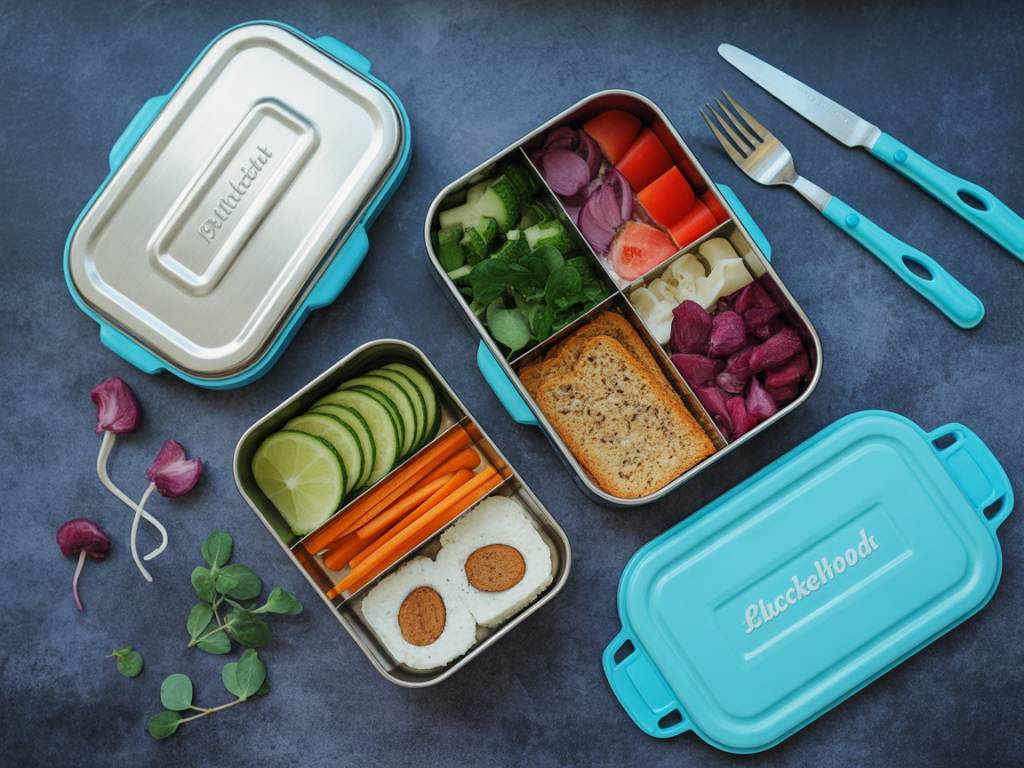
By 11:30 a.m., the pattern se répète: energy crash, brain en mode veille, envie de sucre. Souvent, le coupable est dans le sac ou le cartable : une lunchbox trop légère, trop riche en sucres rapides… ou tout simplement tiède et peu appétissante.
Préparer une boîte repas équilibrée qui reste fraîche jusqu’à 13h (ou 15h) ressemble parfois à un problème de logistique industrielle. Pourtant, avec quelques règles simples et un peu de méthode, c’est tout à fait gérable au quotidien — que ce soit pour le bureau ou pour l’école.
The 3 rules of a truly “balanced” lunchbox
Forget the Instagram aesthetics for a minute. A balanced lunchbox is first a question of macronutrients and satiety, not only of colours.
For most adults and school-age children, aim for this simple plate model:
- ½ veggies (raw, cooked or mixed) – fibre, volume, vitamins
- ¼ protein – satiety, stable energy
- ¼ slow carbs – fuel that doesn’t burn out in 30 minutes
- + a bit of healthy fats – taste and long-lasting fullness
Translated into lunchbox language, it becomes:
- Veggies: carrots, cucumber, cherry tomatoes, mixed salad, leftover roasted veg, frozen peas, coleslaw with light dressing
- Protein: chicken, tuna, sardines, eggs, tofu, lentils, chickpeas, Greek yogurt, cheese cubes
- Slow carbs: wholegrain bread, brown rice, quinoa, wholewheat pasta, potatoes, oats
- Fats: nuts, seeds, olive oil, avocado, cheese, hummus
If you’re short on time, use this mental shortcut:
Protein + Plant + Carbs + Crunch + Colour
Example: chicken (protein) + carrot sticks (plant) + wholemeal pita (carbs) + nuts (crunch) + berries (colour).
How much food do you actually need?
Most people either under-pack (“I’ll buy something extra if I’m hungry” – then it’s the vending machine) or over-pack and end up with soggy leftovers.
Use your hand as a neutral, always-with-you measuring tool:
- Protein: 1 palm (adults), ½ palm (younger kids)
- Carbs: 1 cupped hand (adults), ½ cupped hand (kids)
- Veggies: 2 fists (adults), 1 fist (kids)
- Fats: 1–2 thumbs (adults), ½–1 thumb (kids)
Then adjust with reality: if you regularly hit the 4 p.m. vending machine, your lunch is probably too small in protein or fats. If you feel heavy and sleepy at 2 p.m., carbs and portion size are likely the issue.
Keeping food safe and fresh: the non-negotiables
A balanced lunchbox that spent the morning at 25°C loses tout son intérêt. Food safety first.
Public health agencies are fairly clear: perishable foods (meat, fish, dairy, cooked grains) shouldn’t stay more than 2 hours at room temperature, less if it’s hot. In reality, office fridges, insulated bags and a couple of ice packs solve 90 % of the problem.
Checklist to keep in mind:
- Cool it fast: let leftovers cool on the counter (max 1 hour), then straight into the fridge, uncovered or loosely covered so the heat escapes.
- Pack cold: refrigerate your lunchbox overnight when possible. In the morning, transfer directly from fridge to insulated bag with an ice pack.
- Use two temperatures: one container for foods you’ll reheat (pasta, rice bowls), one for foods best served cold (salad, fruit), so nothing suffers.
- Skip the danger zone: mayo-heavy salads, raw egg, fish that needs perfect refrigeration are risky if you don’t have a proper fridge.
- “Smell test” is not enough: bacteria can grow without noticeable smell. When in doubt, throw it out.
For kids’ lunchboxes, assume no reliable fridge unless the school confirms otherwise. That means more shelf-stable options (nut butters, hard cheeses, hummus, canned tuna or salmon packed the same morning, well-chilled yogurts) and always an insulated bag + ice pack combo.
Choosing the right containers (without spending a fortune)
No need for a £50 bento set. But a few good containers will make the job easier and safer.
Look for:
- Leak-proof closures: snap lids or screw tops, especially for sauces and yogurts.
- Microwave-safe (if you reheat): glass or BPA-free plastic, easily recognisable at the office microwave.
- Compartments: avoid everything touching if textures matter to you (and they often do).
- Easy to wash: few angles, dishwasher-safe, lids you can actually clean properly.
Minimum viable “kit” for an adult:
- 1 medium bento-style box (800–1,000 ml) with 2–3 compartments
- 2–3 small containers for sauces, nuts, hummus
- 1 insulated bag + 1–2 ice packs
- 1 reusable bottle (hydration plays a bigger role than you think in afternoon energy)
For kids, add:
- A lunchbox that opens easily for small hands
- Separate, clearly visible compartments (kids eat more when food is “organised”)
- Sturdy cutlery or finger-food format to reduce “I didn’t have time to eat” excuses
What actually stays fresh until lunch?
Some foods are objectively better travellers than others. If your lunchbox often ends in the bin, regard it as an A/B testing problem.
Foods that generally travel well:
- Whole fruits: apples, pears, grapes, berries, clementines, bananas (protected from squashing)
- Raw veg: carrots, cucumber, radishes, cherry tomatoes, peppers
- Cooked veg: roasted carrots, courgettes, peppers, broccoli, green beans, beetroot
- Grain bases: couscous, quinoa, brown rice, barley, cold pasta salads
- Proteins: hard-boiled eggs, grilled chicken, meatballs, tofu cubes, lentil salads, cheese, hummus
- Snacks: nuts, seeds, oat bars, wholegrain crackers
Foods that are trickier unless very well managed:
- Leafy salads already dressed – they wilt and get sad fast.
- Cut apples/pears without lemon – they brown (still edible, but kids will often refuse them).
- Very saucy leftovers in weak containers – hello office-bag disaster.
- Fish with strong smell – unless you want to negotiate with colleagues at the microwave.
Two simple hacks:
- Keep sauces separate: pack dressing, soy sauce, pesto, etc., in a tiny container and add at the last minute.
- Use barriers: place crackers or bread in a separate compartment from wet foods. A salad leaf or baking paper can act as a physical barrier inside the box.
Fast “templates” for adult lunchboxes
Instead of recipes, think in formulas you can adapt to what’s in the fridge.
1. The grain bowl
- Base: 1 cupped hand of cooked quinoa / brown rice / bulgur
- Protein: grilled chicken, tofu, tinned salmon or chickpeas
- Veg: roasted carrots + broccoli + peppers or any leftovers
- Extras: seeds + a spoon of hummus or a drizzle of olive oil
- On the side: dressing in a small container (yogurt + lemon + herbs)
Prep tip: cook a big tray of mixed vegetables on Sunday, portion into 3–4 boxes for the week. Change only the base and the protein.
2. The upgraded sandwich box
- Wholemeal bread, wrap or pita
- Protein: turkey, tuna, falafel, leftover steak, or cheese + hummus
- Veg inside: lettuce, tomato, cucumber, grated carrot
- Side veg: raw veg sticks with extra hummus or tzatziki
- Fruit: apple, handful of grapes or berries
- Optional: a few nuts for crunch and long-lasting satiety
To avoid sogginess, layer: spread, salad leaves, then “wet” veg like tomato, then protein. Or pack bread and filling separately and assemble at work.
3. The “leftovers remix”
- Take last night’s dinner base (pasta, rice, potatoes, cooked veg).
- Add extra veg (frozen peas, spinach, cherry tomatoes).
- Top up protein if needed (tinned beans, shredded chicken, cheese cubes).
- Add a fresh element at the last second: rocket, herbs, lemon juice, grated carrot.
Idea: turn leftover roast chicken + potatoes + carrots into a cold salad with a mustard-yogurt dressing and some pickles for acidity.
Kid-friendly boxes that actually get eaten
For children, the objective is the same (balanced, fresh, safe) but the constraints change: small hands, short lunch breaks, food “phases”, peer pressure.
Some principles that work in practice:
- Finger foods win: everything that can be eaten with fingers or a simple fork is more likely to disappear.
- Predictable structure: for example: 1 main + 2 veg/fruit + 1 dairy + 1 small treat. Kids love routine.
- Include 1 “sure value” food: something you know they’ll eat even on a bad day (cheese cubes, a favourite fruit, plain bread).
- Let them choose 1 element: between two fruits, two snacks, or two mains that you approve anyway.
Example lunchbox for a primary-school child:
- Main: wholemeal wrap with chicken, cheese and grated carrot
- Veg: cucumber and cherry tomatoes
- Fruit: grapes (cut for younger children)
- Dairy: small natural yogurt (well chilled with ice pack)
- Treat: a square or two of dark chocolate or a small homemade cookie
And if your child comes home with half the lunch untouched? Treat it as feedback, not failure. Ask specific questions: “Was it too hard to open? Not enough time? Something you didn’t like?” Often the issue is practical, not nutritional.
Batch-prepping without losing your Sunday
Spending 3 hours cooking for the week rarely survives real life. The goal is to reduce decision fatigue, not to add another chore.
A realistic prep routine can look like this:
- Once a week (30–45 min):
- Cook 1 big grain base (rice, quinoa, bulgur).
- Roast 1–2 trays of mixed veg with olive oil, salt, herbs.
- Prepare 1 big batch of protein (roast chicken, tofu, lentil salad, boiled eggs).
- Wash + cut some raw veg (carrots, cucumber, peppers) and store in airtight boxes with a bit of water for carrots.
- Each evening (10 min):
- Assemble tomorrow’s lunch from the prepared bases.
- Add fresh elements (salad leaves, fruit, nuts).
- Put the entire lunchbox in the fridge overnight so it’s cold for the morning.
If cooking on Sunday feels unbearable, shift your “prep window” to another day that suits your schedule (Wednesday evening for Thursday–Monday, for instance) and rely more heavily on shortcuts: frozen veg, canned beans, pre-washed salad.
Cost, reality and the “is it really worth it?” question
Let’s tackle the obvious objection: “Buying food near the office is easier.” Oui, plus simple. But more cher — and not always more balanced.
In many UK cities, a basic lunch (sandwich + drink + snack) is easily £6–£9. Five times a week, that’s £30–£45. Over a month, £120–£180. Over a year, more than £1,000.
Home-packed lunch cost, with basic ingredients bought smartly (grains, frozen veg, seasonal fruit, tinned fish, chicken, eggs), gravitates more around £1.50–£3 per meal. Even with some “premium” items, you’re often at half the price of a bought lunch — with more control on sugar, salt and portion size.
The real constraint isn’t the money, it’s the mental load. So simplify decisions:
- Assign “themes” to days (grain bowl Monday, sandwich Tuesday, leftovers Wednesday…).
- Repeat the same 4–5 lunch combinations on rotation.
- Keep a “panic drawer” at work: nuts, wholegrain crackers, tinned soup, oats.
When you compare, don’t just look at cost. Look at how you feel at 3 p.m. after each option. That’s often enough to tip the balance.
Troubleshooting: common problems and fast fixes
“I’m starving again at 4 p.m.”
- Increase protein (add eggs, beans, yogurt, more meat/fish/tofu).
- Add some healthy fats (nuts, seeds, olive oil, avocado, cheese).
- Swap refined carbs for wholegrain options.
“My salad is always sad and wilted.”
- Keep dressing separate until just before eating.
- Use sturdy greens (kale, cabbage, rocket) instead of only soft lettuce.
- Put heavier, wet ingredients at the bottom of the box, salad leaves on top.
“My kids barely touch their lunch.”
- Involve them in choosing between 2–3 options for each category.
- Reduce portion size but increase energy density (more protein, fats).
- Make it visually clear what “the plan” is: main in the big compartment, sides in the small ones, treat in a specific corner.
“I don’t have a fridge at work/school.”
- Invest in a decent insulated bag and good ice packs.
- Use more shelf-stable foods: nut butters, hard cheese, whole fruit, raw veg, tinned fish opened at lunch, wholegrain crackers.
- Avoid high-risk foods (raw fish, fresh mayo-based salads) on hot days.
Turning lunchboxes into an easy habit
Preparing balanced lunchboxes that stay fresh is less about cooking skills than about systems:
- A clear template (protein + plant + carbs + crunch + colour)
- A small, reliable set of containers
- 10–15 go-to ingredient combos you like and can make half-asleep
- One short weekly prep block + 10 minutes each evening
Test for a week, not a lifetime. Pick five days, plan five simple boxes using the formulas above, and observe: your energy level, your budget, the amount of food wasted, and, if you have kids, what comes back in the box.
From there, adjust like a good investigator: keep what works, discard what doesn’t, and remember that “good enough, most days” beats “perfect, one week per year”. Your lunchbox isn’t a lifestyle statement; it’s a tool. The goal is simple: arrive at the end of the day still focused, still human, and not hostage to the nearest vending machine.