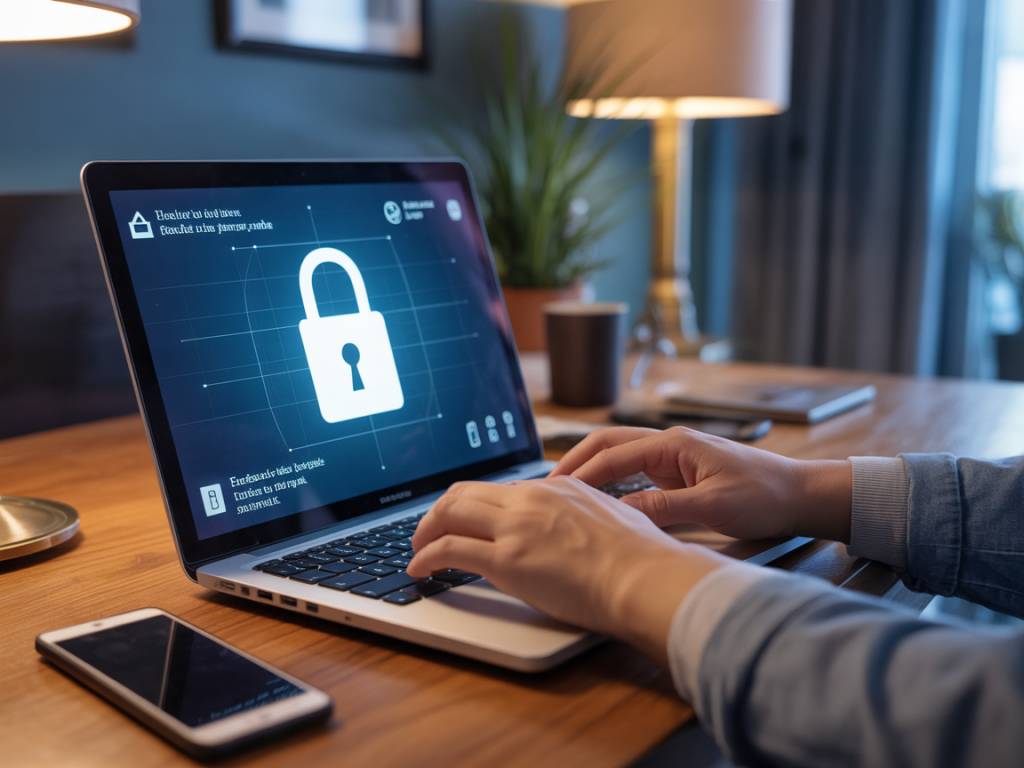
How to secure your online data with tools accessible to everyone on any budget
If you think protecting your online data means hiring an IT department or investing in gadgets that look like props from a spy movie, good news: you’re overestimating both the danger and the budget. Most leaks, hacks and data losses ne viennent pas d’attaques hollywoodiennes, mais de choses beaucoup plus banales : un mot de passe réutilisé, un smartphone perdu, un lien piégé cliqué un peu trop vite.
The other good news: with a few free or low-cost tools, you can raise your level of protection from “easy target” to “not worth the effort” in a weekend. That’s the goal here: practical, budget-aware security that fits real life.
Why your data is more valuable than you think
Start with a blunt question: who would actually want your data?
- Cybercriminals, because your accounts are a doorway to money (banking, PayPal, shopping sites), identity theft or resale on dark markets.
- Companies and data brokers, who use your habits and preferences to sell or target you.
- Curious people around you (colleagues, ex, voisins) who can access badly secured devices or shared computers.
Even if you’re not a CEO or influencer, your digital life is full of assets: photos, messages, documents, copies of ID, invoices, logins. Losing control over this has very concrete consequences: locked accounts, emptied bank cards, blackmail using private photos, or simply the loss of years of work and memories.
The question isn’t “Am I important enough to be targeted?”, but “Do I have something that would cost me time, money or dignity if I lost it?” If the answer is yes (it is), then it’s worth a minimal security strategy.
The three pillars of simple, affordable protection
Before listing tools, a quick framework. Almost every decision you’ll make in security sits on three pillars:
- Access: Who can log in to your accounts and devices?
- Visibility: Who sees what you do online and what’s stored where?
- Resilience: If something goes wrong, how fast can you recover?
Affordable security is just about reinforcing these three points, step by step, using tools you mostly already have… but rarely use to their full potential.
Zero-budget essentials: tools you already have
Let’s start with the scenario “I don’t want to spend anything”. You still have options. A lot of them.
Use a (good) free password manager
Reused passwords are still the easiest way to get hacked. One leaked password, dozens of accounts at risk. A password manager generates and stores strong passwords so you don’t recycle the same “Paris2024!” everywhere.
Free, reputable options include:
- Bitwarden (free tier)
- NordPass (free tier)
- Proton Pass (free tier)
- Built-in managers: your browser (Chrome, Edge, Firefox) or your phone (Apple Keychain, Google Password Manager)
What to do concretely:
- Pick one password manager and stick to it.
- Create one strong master password (a long phrase works well: for example, “MyFirstFlatWas209AndTheRoofLeaked”).
- Enable sync between your phone and your laptop so you’re not tempted to go back to “123456” on mobile.
- Each time you log into a site, let the manager save the password and suggest a new strong one when possible.
Cost: €0. Security gain: massive.
Turn on two-factor authentication (2FA) wherever it matters
Even a strong password can be stolen, phished or leaked in a data breach. Two-factor authentication adds a second check: typically a code generated on your phone or via an app.
Where to activate it first:
- Your main email address (Gmail, Outlook, iCloud…)
- Your main cloud storage (Google Drive, OneDrive, Dropbox, iCloud, Proton Drive)
- Banking apps and PayPal-like services
- Social media accounts that matter to you (especially if tied to your business)
Prefer authenticator apps to SMS where possible, because SMS can be intercepted or redirected.
Free authenticator apps:
- Google Authenticator
- Microsoft Authenticator
- Authy
- Duo Mobile
Plan 10 minutes per service to enable 2FA. Yes, it’s slightly annoying. So is being locked out of your accounts for days.
Lock down your smartphone and laptop
We worry a lot about hackers in distant countries and not enough about something much more probable: losing a phone in a taxi or forgetting a laptop in a café.
Minimum settings to check on your devices (all built-in, all free):
- Screen lock with PIN, password, fingerprint or Face ID. Disable simple 4-digit codes if possible.
- Automatic lock after 1–2 minutes of inactivity.
- Device encryption:
- On iPhone and most Android phones, it’s enabled by default when you set a screen lock.
- On Windows: BitLocker (Pro/Enterprise) or device encryption on some Home editions.
- On macOS: FileVault (activate it in Settings > Security & Privacy).
- “Find my device” features:
- Find My (Apple)
- Find My Device (Google / Android)
- Find My Device (Windows)
These allow you to locate, lock or wipe a lost device remotely.
Five minutes per device, and suddenly a stolen phone is an inconvenience, not a disaster.
Harden your browser and main accounts
Most of your digital life passes through one browser and one main email address. Securing these two is like reinforcing the front door instead of obsessing about the garden gate.
Actions to take:
- Update your browser (Chrome, Edge, Firefox, Safari). Set it to update automatically.
- Install a reputable ad-blocker that also blocks malicious domains:
- uBlock Origin (free, open-source)
- Brave browser with built-in blocking
- Limit extensions: remove everything you don’t use regularly. Many extensions read what you see on pages; less is safer.
- Review privacy/security settings:
- Block third-party cookies where possible.
- Disable password saving if you’re using a separate password manager.
- Turn on “enhanced” or “strict” tracking protection options.
For your main email account, do a quick audit:
- Check active sessions and connected devices; log out of anything you don’t recognise.
- Review connected apps (those that “sign in with Google/Microsoft/Apple”); revoke access for anything you no longer use.
- Set up recovery options: a backup email and phone number that you actually still use.
Back up the only things you really can’t lose
Data security isn’t just about blocking attackers; it’s also about surviving accidents: disk failures, lost devices, corrupted files. Backups are your parachute.
Without spending anything, you can often use a mix of:
- Free cloud storage tiers (Google Drive, OneDrive, Dropbox, iCloud, Mega, Proton Drive)
- An old USB key or external drive you already own
>
Simple strategy:
- List the “critical” items:
- IDs, contracts, legal documents, work documents
- Photos and videos you’d regret losing
- Store them:
- In a main location (laptop, phone) plus
- In a second location (cloud or external drive)
Once a month, copy new important files to the backup. Thirty minutes, one reminder in your calendar, big long-term payoff.
Small budget, big upgrade: under €10/month
If you’re ready to invest the price of two coffees per month, your options open up. The idea isn’t to buy everything, but to choose what matches your biggest risk.
Upgrade your password manager (if you share or sync a lot)
Paid plans generally bring:
- Unlimited devices and sync
- Password sharing with family or team members (without revealing the password)
- Dark web monitoring for leaked credentials
- Emergency access for a trusted person
Typical cost: around €1–€4/month. If you’re managing dozens of accounts, family logins, or small business access, this is often the most cost-effective upgrade you can buy.
Use a serious cloud backup instead of a pile of USB keys
If you have a lot of photos, creative work, or project files, relying on a single external drive is risky: they fail more often than you’d think, and they don’t help against theft or fire.
Affordable options:
- Cloud storage bundles:
- Microsoft 365 Personal/Family: Office apps + 1 TB of OneDrive per user
- Google One plans: extra Google Drive storage
- iCloud+ plans for Apple users
- Dedicated backup services (often around €5–€10/month) that continuously back up your computer in the background.
What you’re buying here is not “space”, but the ability to say, after a crash: “Okay, I’ve lost the device, not my life inside it.”
Consider a VPN for risky networks, not as a magic shield
VPNs are heavily marketed as the answer to every online problem. They’re not. But they are useful in specific cases:
- You often use public Wi-Fi in cafés, airports or hotels.
- You travel in countries with heavy internet censorship.
- You want to hide your IP address from sites and providers.
What a VPN does do:
- Encrypts your traffic between your device and the VPN server.
- Makes it harder for people on the same Wi-Fi (or your ISP) to see what you’re doing.
What it does not do:
- Protect you from phishing (fake sites that trick you into entering your password).
- Make you “anonymous” if you’re logged into Google, Facebook, etc.
- Replace antivirus or backups.
Reputable paid services are often around €3–€8/month on long-term plans. If you don’t use public Wi-Fi much, you can skip this and put the budget elsewhere.
For freelancers and small businesses: policy matters more than gadgets
If your laptop is your livelihood or you manage client data, the stakes are higher. That doesn’t necessarily mean spending more; it often means being more disciplined.
Map your real risks in 15 minutes
Grab a notepad and answer four questions:
- What data would really hurt me (or my clients) if it was leaked?
- What data would really hurt me if it was lost forever?
- Who else has access to this data (partners, tools, cloud services)?
- What would stop me working tomorrow if it broke or vanished?
From these answers, you’ll usually identify 3–5 priority areas: for example, client contracts, invoices, project files, email and social accounts linked to your brand.
Implement a simple “3-2-1” backup rule
For business-critical data, a common, robust model is:
- 3 copies of your data
- 2 different types of media (e.g. computer + external drive)
- 1 copy off-site (cloud backup or storage in another location)
In practice for a freelancer or micro-business:
- Working copy on your laptop or main device.
- Automatic backup to an external drive at your office/home.
- Automatic or regular backup to a secure cloud service.
Cost: often €5–€10/month plus a one-time external drive. Cost of losing everything the week before a deadline? You can do the math.
Standardise tools and access for your team
Even with a tiny team (two co-founders, a VA, a freelance developer), chaos kills security. Shared passwords in a spreadsheet, client files scattered across personal Dropbox accounts, admin rights for everyone… familiar?
Affordable tools and habits:
- Team password manager:
- Bitwarden Teams, 1Password Business, Dashlane Teams, etc.
- Create shared vaults for “Social Media”, “Finance”, “Clients”.
- Remove access when someone leaves, without changing every single password.
- Single source of truth for files:
- Pick one: Google Workspace, Microsoft 365, Dropbox, Notion, etc.
- Ban client files from personal clouds.
- Create shared folders per project or department.
- Basic written rules (one page is enough):
- How to create and store passwords.
- Which tools are “official” for files and communication.
- What to do if a device is lost or an account looks suspicious.
You’re not aiming for ISO certification. You’re aiming for “if my colleague quits tomorrow, I still have access to everything and I don’t discover that the only admin of our Facebook page was their personal account.”
The weekend security sprint: a realistic action plan
If you want something concrete you can actually do in 48 hours, here’s a practical roadmap. Adjust depending on your level and budget.
Day 1 – Lock down access
- Install and configure a password manager (desktop + mobile).
- Change the passwords for:
- Main email
- Bank and payment accounts
- Main cloud storage
- Social media you really use
Use random passwords generated by the manager.
- Turn on 2FA on those same accounts (prefer authenticator apps).
- Enable device encryption and “Find my device” features on your phone and laptop.
Day 2 – Improve visibility and resilience
- Audit your browser:
- Update it and set auto-updates.
- Install uBlock Origin or similar.
- Remove unused extensions.
- Tighten privacy/tracking settings.
- Set up backups:
- Identify key folders (Documents, Photos, Work).
- Back them up to an external drive or free cloud tier.
- If budget allows, configure a paid cloud backup for automatic sync.
- For freelancers/SMBs:
- Write your 1-page “data rules” for you/your team.
- Centralise passwords in a team manager and invite collaborators.
At the end of this sprint, you won’t be invincible (nobody is), but you’ll have moved from “very easy target” to “decently protected citizen of the internet”. Without buying a single gadget.
How to keep it sustainable without turning into an IT hobbyist
The hardest part of security isn’t the tools, it’s the habits. You don’t need to read cybersecurity blogs every day, but you do need a few recurring routines.
Three recurring reminders to set in your calendar:
- Every month:
- Check that backups are working (can you actually open a backed-up file?).
- Install pending updates on your devices and main apps.
- Every 6 months:
- Review your main accounts’ security settings.
- Remove old connected apps and devices.
- Rotate passwords for critical services (email, bank, primary cloud).
- Once a year:
- Ask yourself: what’s changed? New devices, new job, more travel, more remote work?
- Adjust your tools accordingly (for example, add a VPN if you now work from cafés every day).
None of this requires being “good with tech”. It requires something much rarer: deciding that your time, your money and your personal life are worth a few hours of structure.
Cybercriminals look for the lowest-effort targets. By using free and low-cost tools intelligently, you quietly move yourself—and possibly your business—out of that category. And that’s already a very good return on investment.
À propos de l'auteur