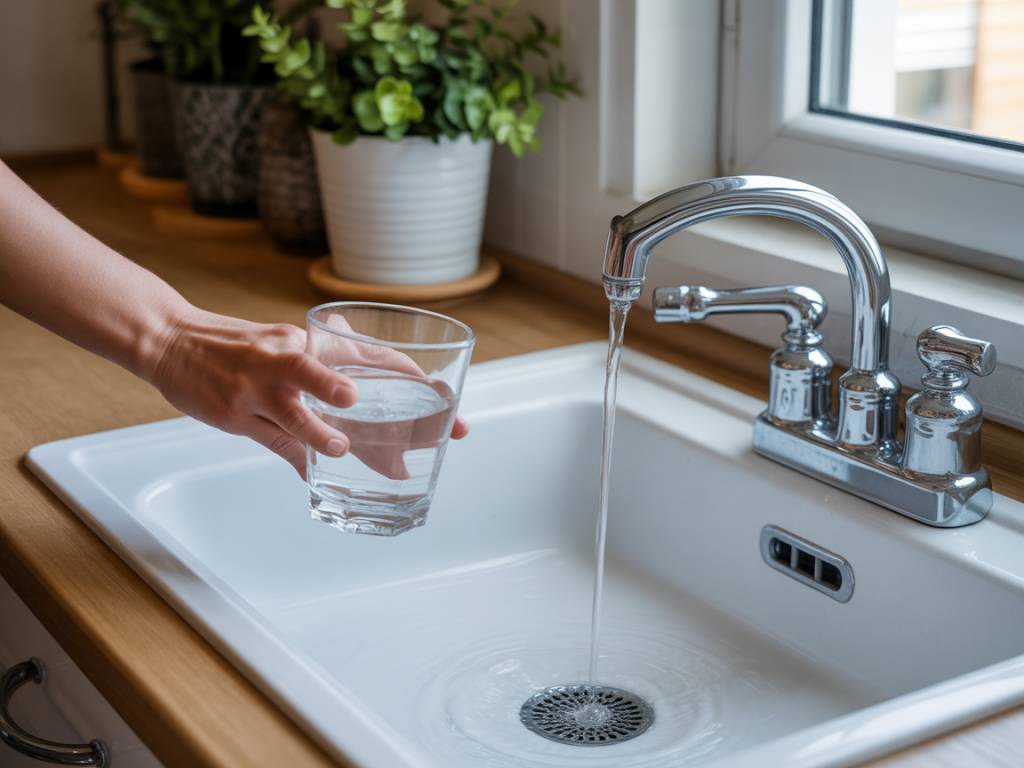
Pfas in drinking water in the UK and what you can do to reduce your exposure at home
“Forever chemicals” in your tap water. The phrase sonne déjà comme une mauvaise blague. Pourtant, au Royaume-Uni, c’est une réalité mesurable, documentée, mais encore très mal comprise du grand public.
Si vous avez récemment vu passer des articles sur les PFAS dans l’eau potable, vous avez sans doute eu deux réactions successives :
Est-ce que je dois m’inquiéter pour ma santé ?
Et honnêtement, qu’est-ce que je peux faire à la maison, à part paniquer ?
Cet article répond à ces deux questions, sans dramatisation inutile, mais sans minimiser non plus un sujet qui va probablement occuper les autorités sanitaires et les consommateurs britanniques pendant des années.
PFAS: what are they, and why are they in your water?
PFAS stands for per- and polyfluoroalkyl substances. It’s not just one chemical but a huge family of more than 4,700 synthetic compounds used since the 1950s for their “magic” properties:
Heat resistant
Water and oil repellent
Extremely durable (that’s the problem)
You’ll find PFAS in:
Non-stick pans (Teflon-type coatings)
Waterproof outdoor clothing
Food packaging (especially grease-proof paper, some fast-food wrappers)
Firefighting foams
Industrial processes and coatings
Some cosmetics and cleaning products
They’re called “forever chemicals” because they don’t break down easily in the environment. Once released, they spread: into soil, rivers, groundwater… and, eventually, drinking water.
What’s the situation in UK drinking water?
Let’s start with the uncomfortable bit: PFAS have been detected in drinking water across the UK, but the picture is patchy and incomplete.
Key points to know based on recent reports and publicly available data:
Water companies in England and Wales are required to monitor for a limited set of PFAS, but not the full 4,700+ family.
A 2023 analysis by The Guardian and Watershed Investigations found PFAS in the tap water of several regions, sometimes near or above proposed safety thresholds used in other countries.
Scotland has its own monitoring programmes, particularly around known contamination sites linked to firefighting foams.
Regulation is lagging behind science:
The UK currently has guideline levels for some PFAS in drinking water, but they’re less strict than the limits adopted in some EU countries and the latest US EPA proposals.
There is no single “PFAS limit” yet; different compounds are treated separately or in small groups, even though people are exposed to mixtures in real life.
So: yes, PFAS are in UK drinking water at low but measurable levels, and the regulatory framework is still catching up. That’s the background. Let’s talk about what it means for your health.
Are PFAS in tap water actually dangerous?
Here, the evidence is less vague.
Large epidemiological studies (mainly from the US and Europe, around communities exposed to higher levels of PFAS) have linked long-term PFAS exposure to:
Increased cholesterol levels
Reduced immune response (e.g. weaker response to some vaccines)
Certain cancers (kidney, testicular) for specific PFAS like PFOA
Thyroid disruption
Lower birth weight and some pregnancy complications
Important nuance:
Most of the strongest data come from populations exposed to levels far higher than what is typically found in UK municipal water.
However, toxicologists increasingly argue that some PFAS may have health effects at very low concentrations, especially with lifelong exposure and combined from multiple sources (water, food, dust, products).
Think of PFAS risk less as “instant poisoning” and more as an extra long-term burden on your body’s systems. If you’re generally healthy, the immediate risk is low. If you’re pregnant, planning a family, immunocompromised, or already dealing with thyroid or cholesterol issues, you may reasonably want to reduce your exposure where it’s practical to do so.
How do PFAS get into your home in the first place?
If we zoom in on your everyday life, drinking water is one source, but not the only one. PFAS can enter your home through:
Tap water (drinking, cooking, making tea and coffee)
Food (fish from contaminated waters, food packaged in PFAS-treated materials, processed foods)
Household products (water-repellent sprays, stain-resistant carpets and sofas, some cleaning products)
For most people in the UK, drinking water is one of several contributors, but it’s also one of the easiest to tackle, because you can change what you drink and how you filter it relatively quickly.
Should you stop drinking tap water?
This is usually the first reaction. It’s also rarely the most rational one.
Tap water in the UK is, overall, safe to drink. It’s also:
Much cheaper than bottled water
Far better for the environment (no plastic, no transport)
Subject to regular microbiological and chemical checks
Bottled water, on the other hand:
Is not automatically PFAS-free (few brands publish full PFAS testing data)
Can contain microplastics and other contaminants
Costs easily 200–500 times more per litre than tap water
If you’ve already switched entirely to bottled water “just in case”, you’re probably paying a lot for a risk reduction that is uncertain at best.
A more balanced approach: keep tap water as your base, and improve its quality at home with targeted measures that actually work on PFAS.
What actually reduces PFAS in home drinking water?
Boiling water does not remove PFAS. Storing it in the fridge does not remove PFAS. Let’s focus on what does work.
Activated carbon is the technology behind most jug filters and many under-sink systems. It works by adsorbing certain contaminants onto a very porous carbon surface. For PFAS:
Pros:
Widely available (Brita-type jugs, supermarket brands, under-sink cartridges)
Relatively affordable upfront
Some types of PFAS, especially the older “long-chain” ones like PFOA and PFOS, are moderately well removed by good-quality carbon filters
Also improves taste and odour (chlorine, some organic compounds)
Cons:
Efficiency is highly variable between brands and even between different PFAS
Filters must be changed regularly; once saturated, they can start releasing captured contaminants
Not all jug filters are certified for PFAS reduction – most focus on chlorine, limescale, and lead
If you choose this route, look specifically for:
Filters that publish independent lab tests for PFAS removal, not just generic claims
Models certified to NSF/ANSI standards 53 or 58 with explicit mention of PFAS (often PFOA and PFOS)
Cost estimate for a UK household:
Jug filter: £15–£40 upfront, then £40–£100/year in cartridges (depending on use and brand)
Under-sink carbon system: £80–£250 upfront, then £50–£150/year in cartridges
Impact on PFAS: moderate but meaningful, especially for a “first line” against the most studied compounds.
Option 2: Reverse osmosis (RO) systems
Reverse osmosis is more aggressive: water is pushed through a semi-permeable membrane that rejects many dissolved substances, including most PFAS.
Pros:
One of the most effective household technologies for PFAS reduction
Also reduces many other contaminants (nitrates, some heavy metals, some microplastics)
Can be installed under the sink with a dedicated tap
Cons:
More expensive upfront (£200–£600 for a domestic system) + ongoing filter and membrane replacement
Wastes some water during the process (1–3 litres rejected per litre produced, depending on system)
Removes beneficial minerals too; the taste can be very “flat” unless remineralised
Requires a bit more maintenance (multiple stages to monitor)
If your budget allows and you’re particularly cautious (young children, pregnancy, near a known contamination site), RO is currently the most robust home solution. Just verify:
That the specific system has independent test data on PFAS reduction
That you understand the maintenance schedule and costs over 3–5 years, not just the sticker price
Option 3: Whole-house filtration
Some people look at PFAS and think: “I’ll just filter the whole house.” Technically possible, but not always logical.
A whole-house system can reduce PFAS not only in drinking water, but also in:
Shower and bath water (inhalation and dermal absorption are less significant for PFAS than ingestion, but not zero)
Water used for cooking, brushing teeth, etc.
However:
These systems are expensive (£800–£2,000+ plus installation and maintenance)
You’ll be filtering water used to flush toilets and water the garden – not exactly cost-efficient
Performance on PFAS varies; many whole-house units are not specifically designed for them
For most urban UK households, it makes more sense to target drinking and cooking water (a dedicated tap) rather than the entire flow into the property.
What about bottled water? Is it safer for PFAS?
Short answer: not necessarily, and rarely in a documented way.
Most bottled water brands in the UK do not publish PFAS testing results. When independent tests have been carried out in other countries, some bottled waters have contained PFAS at levels similar to or higher than municipal tap water.
Plus, by switching entirely to bottled water, you may be trading one uncertain risk (low-level PFAS) for others:
Microplastics and plastic additives leaching from bottles, especially if stored warm
Higher CO₂ footprint from transport and packaging
Significant cost: a family of four drinking only bottled water can easily spend £400–£800 per year
If you still want to use bottled water as a backup, for example during pregnancy or for infant formula, look for:
Brands that publish extended water analysis, ideally including PFAS
Still water in glass bottles, stored out of direct sunlight
But for most households, investing the same money in a good home filtration system will deliver more predictable benefits.
PFAS reduction at home: practical checklist
If you want a realistic, step-by-step approach rather than an overhaul of your life, here’s a pragmatic order of attack.
1. Improve what you drink and cook with
Check if your water provider publishes PFAS data; if not, consider asking them directly.
Install at least a good-quality activated carbon filter for water you drink and use for cooking.
If you’re in a high-risk group or have the budget and motivation, consider an RO system for drinking water.
2. Reduce other major PFAS sources you control
Retire old, damaged non-stick pans and replace them with stainless steel, cast iron, or PFAS-free ceramic.
Avoid “stain-resistant” or “waterproof” treatments on sofas, carpets, and textiles unless the manufacturer clearly states “PFAS-free”.
Be cautious with waterproof outdoor gear; some brands now offer PFAS-free DWR (durable water repellent) coatings – it’s worth checking.
3. Audit your bathroom and cleaning cupboard
Scan cosmetics and toiletries for ingredients with “fluoro” or “PTFE” in the name – these often indicate PFAS.
Prioritise PFAS-free alternatives for products you use daily on large skin areas (foundations, body lotions) or near the eyes and mouth.
Be wary of “miracle” cleaning products and waterproofing sprays that don’t disclose full ingredient lists.
4. Tidy up your food habits
Limit very greasy fast food that comes in coated cardboard/wrappers – some of these still use PFAS-based grease barriers.
Prefer cooking at home in non-PFAS cookware when possible.
If you eat a lot of freshwater fish from local rivers/lakes, check whether there are any advisories in your region.
None of these actions alone will “detox” your life. Together, they can significantly reduce your overall PFAS load, at a cost and effort level you control.
What about kids and babies?
Understandably, parents tend to worry more, and for once, that’s aligned with toxicology: children are more vulnerable because:
They drink more water per kilogram of body weight than adults
Their organs and immune systems are still developing
Exposure early in life can have long-term effects
If you have young children or are preparing formula milk, reasonable steps include:
Using filtered water (good activated carbon or RO) for drinking and formula preparation
Not relying solely on bottled water unless you know more about its composition than just “natural source” marketing claims
Being extra cautious with PFAS-containing household products (carpets in nurseries, stain-proof treatments, etc.)
You don’t need to create a sterile bubble. Just make sure that the water and products your child is exposed to every single day are as “low-PFAS” as reasonably affordable.
How to stay informed without losing your mind
PFAS are a moving target: new studies, new regulations, new scandals. It’s easy to go from “I should probably do something” to “Everything is toxic; what’s the point?”
A more sustainable strategy:
Follow updates from reputable sources: the UK Drinking Water Inspectorate (DWI), the Environment Agency, NHS guidance, and independent health charities.
Ignore social media panic posts that don’t link to actual data, and marketing that magically solves “all toxins” with a miracle gadget.
Reassess your set-up every 2–3 years: filters, brands, household products. You don’t need to optimise every month.
Think of PFAS like air pollution or ultra-processed food: you won’t eliminate them from your life, but you can meaningfully reduce your exposure with targeted choices that don’t require moving to a cabin in the Highlands.
Where this is heading – and what you can control today
Over the next decade, expect three things in the UK:
Stricter PFAS regulations, including lower limits in drinking water
More testing and more headlines as contamination sites are mapped in detail
A bigger market for “PFAS-free” products and water treatment technologies
You don’t have to wait for Westminster or your water company to catch up to take low-regret actions at home:
Filter the water you drink and cook with using proven technologies (carbon and/or RO)
Gradually phase out PFAS-heavy products you have direct control over (non-stick cookware, stain-proof sprays, certain cosmetics)
Reserve your anxiety for things you can influence – and park the rest
The uncomfortable truth is that PFAS are already part of the modern UK environment. The reassuring part is that, at the scale of your kitchen tap and your weekly shop, you still have more levers than it might seem.