


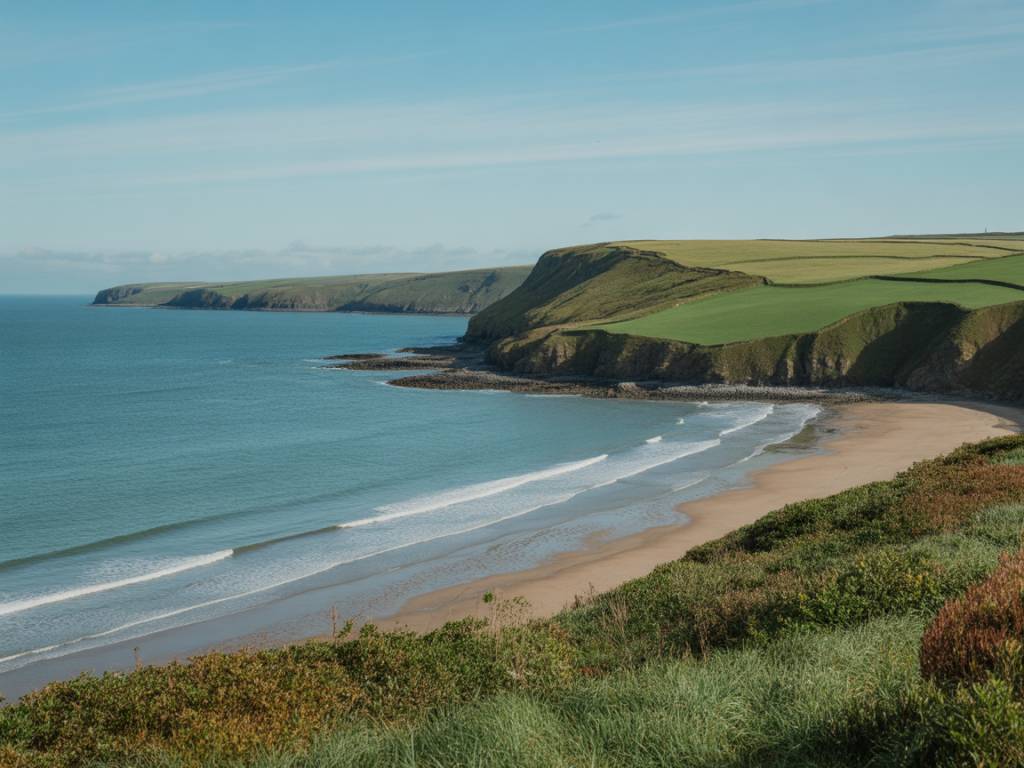
Forget departure lounges, queues at security and last-minute gate changes. Some of the most spectacular coastal escapes in the UK are reachable by train, bus or car – and many of them stay (relatively) under the radar, even in peak season.
If your idea of a break involves big skies, empty beaches and more seabirds than selfie sticks, the UK coastline still delivers. The condition: you have to look slightly beyond the usual Cornwall–Brighton–Bournemouth triangle.
Why a no-airport coastal break makes sense right now
Before diving into maps, unearthed coves and obscure bus routes, it’s worth asking: why bother avoiding airports at all?
Three reasons reviennent systématiquement quand on interroge les voyageurs au long cours (et les riverains) :
- Time vs. stress ratio: For a long weekend, the “cheap” flight often stops being cheap when you add transfers, waiting times and delays. A direct train to the coast can mean door-to-beach in under 3–4 hours from many UK cities.
- Budget transparency: No luggage fees, no airport food at London prices, fewer “surprises”. You know roughly what you’ll spend: transport, accommodation, meals, maybe a kayak rental.
- Lower footprint, higher immersion: You don’t just land somewhere; you cross landscapes to get there. That changes your perception of distance and makes a three-day escape feel like a genuine journey, not just a jump between terminals.
Now, where do you actually go if you want nature, sea air and space to breathe – without being shoulder-to-shoulder with half of London?
How these coastal spots were selected
There’s no official index of “crowd-free beaches with soul and decent logistics”. So here’s the pragmatic filter used to shortlist these getaways:
- Scenery over souvenir shops: Think dunes, cliffs, wildlife, working harbours – not arcades and branded coffee chains.
- Reachable without flying: Train + local bus, or a reasonable drive. Ferries are fine; internal flights are not.
- Less obvious than the headline resorts: Places locals recommend when they don’t want to share their favourite spots on Instagram.
- Enough infrastructure to stay safely: A few pubs, cafés or shops within reach. You’re not being dropped on a rock with nothing but a signal-free phone.
With that in mind, let’s walk the coast – from Northumberland to the far reaches of the Scottish Highlands.
Northumberland’s quiet dunes: Bamburgh, Embleton & Beadnell
If you drew a Venn diagram of “dramatic castles”, “huge beaches” and “not yet ruined by over-tourism”, the overlap would be Northumberland’s coast. The stretch between Bamburgh, Beadnell and Embleton is one of the easiest places in England to feel alone without being stranded.
What it looks like in real life
Picture a wide, wind-brushed beach, a medieval castle perched on a basalt outcrop, and barely a line of deckchairs in sight. Bamburgh Castle dominates the skyline; to the south, Embleton Bay unrolls gently curving sands backed by grassy dunes. Inland, small villages, stone cottages and – crucially – decent pubs.
Why it works as a nature break
- Space: The beaches are long enough that even on a sunny August day, you can walk five minutes and find your own patch of sand.
- Birdlife: The Farne Islands are nearby, with puffins and seals in season (accessible by boat from Seahouses).
- Walking routes: The Northumberland Coast Path links these beaches, so you can base yourself in one village and explore on foot.
How to get there without flying
- Train to Berwick-upon-Tweed or Alnmouth from Edinburgh, Newcastle, York or London.
- Local buses run down the coast (check current timetables; services are decent but not London-frequent).
- Driving? It’s just off the A1, but once you’re there, you can forget the car for days if you like walking.
Who it suits: Walkers, birdwatchers, couples and families who prefer sandcastles to slot machines. If your ideal night out is a rowdy nightclub, this is not your coast.
Yorkshire’s forgotten bays: Runswick Bay & Staithes
Whitby and Scarborough capture most of the attention (and coaches). Just up the coast, two old fishing villages – Runswick Bay and Staithes – offer a more intimate, steep-lane-and-cobbles kind of seaside break.
Runswick Bay in a sentence: A sweep of golden sand, red-roofed houses stacked on a hillside, and few distractions beyond tide, weather and your appetite.
Staithes in a sentence: A tight-knit tangle of cottages around a tiny harbour, beloved by artists and anyone who enjoys the feeling of having stepped quietly out of 2025.
Why they’re good for a low-key nature escape
- Cliff-top and coastal walks: You’re on the Cleveland Way, with vantage points that feel surprisingly wild given the relative proximity to Teesside and York.
- Rock pooling and fossil hunting: At low tide, the foreshore becomes a natural science lab for kids and adults who secretly like poking around in pools.
- Small scale: No huge resorts, no neon arcades, just a few cafés, pubs and local shops.
Getting there
- Train to Whitby (via Middlesbrough) or to Saltburn.
- Local buses link Whitby, Runswick Bay and Staithes (service frequency varies by season).
- By car, it’s roughly 1h30 from York, 1h from Middlesbrough.
When to go: May–June and September are ideal: long daylight, mild temperatures, fewer day-trippers. In winter, it’s atmospheric but can feel very quiet; perfect if “doing nothing” is the plan.
Suffolk’s understated coast: Walberswick, Dunwich & the marshes
If you want a coastal break that feels rural, slow and slightly eccentric, Suffolk’s coast is worth a look. Southwold tends to hog the postcards. Cross the river by foot ferry to Walberswick and the tone changes instantly.
Walberswick & Dunwich in practice
- Walberswick: A shingle-and-sand beach, reedbeds behind, a small green, a couple of pubs, and a crabbing scene that’s low-tech and addictive.
- Dunwich: A hamlet with a pub, a tiny museum about the village that fell into the sea, and big skies over heathland and beach.
Nature on your doorstep
- RSPB Minsmere: One of the UK’s top bird reserves is within walking or cycling distance. You don’t need to be a hardcore birder to appreciate bitterns booming or avocets sweeping the shallows.
- Heath and forest walks: The mix of pine, heather, marsh and coast keeps walks varied even on longer stays.
No-airport access
- Train from London or Cambridge to Halesworth or Dunwich-adjacent Darsham.
- From there, local buses or a short taxi ride take you to Walberswick, Southwold or Dunwich.
- Cycling is a strong option: quiet lanes, mostly flat, and bike-friendly accommodation is common.
Who it suits: Birdwatchers, walkers, slow travellers, solo travellers looking for quiet reading time. Families are fine too, as long as children can cope without a pier full of attractions.
Wales off the radar: Marloes Peninsula & the quiet side of Pembrokeshire
Pembrokeshire is no longer a secret, but the visitor flow is uneven. Tenby and St Davids get the crowds; the south-western fingertip around Marloes remains remarkably peaceful for somewhere this beautiful.
What you’ll actually find in Marloes
- Clifftop drama: The Pembrokeshire Coast Path here is all Atlantic energy, sea stacks and surge channels. On a windy day, you really feel the edge-of-continent effect.
- Seals and seabirds: Autumn brings seal pups to the coves; spring and summer see huge numbers of seabirds on nearby islands like Skomer (book boats well in advance).
- Minimal development: Expect a small village, a car park, some campsites and farm stays. No promenade, no big hotels.
How to get there without a plane
- Train to Haverfordwest or Milford Haven.
- From there, local buses (Pembrokeshire’s “Coastal Buses” operate seasonally) or taxi to Marloes or nearby villages.
- Driving from Cardiff takes around two hours, from London about five (traffic depending).
Practical note: This is one of those places where a car simplifies life, especially outside school holidays when bus timetables thin out. But if you align your trip with the coastal bus schedule, you can hike one-way sections and bus back.
Who it suits: Serious walkers, photographers, anyone who wants wildlife plus proper weather. If you need a plan B for rain, you may find the options limited beyond cafés, pubs and reading in your accommodation.
Cornwall without the chaos: The Lizard Peninsula
Cornwall and “quiet” don’t always go together in the same sentence. But head south to the Lizard Peninsula and you get a very different vibe from Newquay or St Ives. It’s still Cornwall, still popular, yet the feeling is more end-of-the-road than seaside-resort.
The landscape in brief
- Lizard Point: The most southerly point of mainland Britain, all rugged cliffs, turquoise coves and a lighthouse.
- Kynance Cove: Possibly one of the most photogenic coves in the UK – go very early or out of season to experience its quieter side.
- Hidden fishing villages: Cadgwith and Coverack retain traditional charm with small harbours and working boats.
What keeps it (relatively) calmer
- It’s not directly on a mainline railway.
- Roads are narrower and slower, which deters some of the casual day-trippers.
- Accommodation is more scattered: campsites, farm B&Bs, small guesthouses.
Getting there without flying
- Train to Truro or Redruth, then on to Falmouth or Helston by local train/bus.
- From Helston, buses reach several Lizard villages. Expect rural timetables, not city frequency.
- Driving from Bristol takes around 3.5–4 hours in good conditions. In peak summer, add a buffer.
Who it suits: People who want Cornwall’s colours and coastline without being right in the thick of the surf-town party scene. Ideal if your plan is “walk, swim, eat seafood, repeat”.
Scottish Highlands’ edge-of-the-map coast: Assynt & Achiltibuie
If your version of “nature break” means near-silence, long horizons and weather that does exactly what it wants, the north-west Highlands deliver in spades. The coastal areas around Assynt and Achiltibuie feel wild without being inaccessible.
What it actually feels like
- Beaches like Achmelvich and Clachtoll: White sand, clear water that looks Caribbean until you step into it, and usually more space than you’ll know what to do with.
- Mountains right behind you: Suilven, Stac Pollaidh and friends rise up like standalone sculptures rather than continuous ranges.
- Dark skies: On cloudless nights, you see the kind of starfields city dwellers forget exist.
Why it’s still relatively quiet
- No big cities nearby.
- Limited accommodation capacity in villages like Lochinver, Achiltibuie and Ullapool.
- The NC500 has increased traffic, but many people drive through rather than stopping for extended stays.
Getting there sans airport
- Train to Inverness.
- From Inverness, buses to Ullapool and then on to smaller villages, or car hire for maximum flexibility.
- Allow a full day each way if you’re coming from southern England by train: it’s part of the experience, not a footnote.
Who it suits: Hikers, landscape photographers, anyone with a high tolerance for four-seasons-in-a-day weather. If you need nightlife, shopping or a guaranteed dry walk, look further south.
Islands without airports: The Isle of Eigg (Inner Hebrides)
Many Scottish islands have small airports. Eigg doesn’t. You get there by train and ferry, and that simple fact filters the crowd: you’ll mostly meet walkers, nature lovers and people who actively chose slow travel.
What Eigg offers in concrete terms
- Wild beaches: Laig Bay and Singing Sands are striking even by Hebridean standards.
- Car-free calm: Visitors can’t bring cars, which changes the island’s entire atmosphere – and soundscape.
- Community-owned island: The islanders collectively own Eigg. That translates into a different approach to tourism: small-scale, local and sustainability-focused.
Logistics without planes
- Train to Mallaig via Fort William (the West Highland Line is a trip in itself).
- Ferry from Mallaig to Eigg (check seasonal timetables and pre-book in peak months).
- Once on Eigg, you move on foot or by bike; accommodation ranges from basic camping pods to small guesthouses.
Who it suits: Travellers who enjoy logistics as part of the adventure, and who are comfortable with limited shops, sporadic mobile signal and more weather than Wi-Fi.
How to actually make a quiet coastal break work
You’ve picked the coast. You’ve accepted the absence of airport lounges. How do you avoid the classic pitfalls: full accommodation, buses that don’t run, and the “nothing is open” moment?
Book smart, not late
- Accommodation first: In many of these areas, beds are the limiting factor. Trains and ferries rarely sell out outside bank holidays; rooms and cottages do.
- Shoulder seasons win: Late April–June and September–early October often offer the best balance of daylight, prices and crowd levels.
Check local transport before you commit
- Rural bus timetables change with the seasons and funding cycles. Before you book your stay, look up “Getting here” on the local council site or tourist board and download the latest PDFs.
- If you can’t find bus information easily, that’s a sign you may want to budget for occasional taxis.
Pack for the weather you actually get, not the one you see on Instagram
- Layers, waterproofs and decent footwear matter more than the perfect swimsuit.
- A dry bag for your phone and a small daypack can save a walk from becoming a soggy trudge.
Respect the spaces you came to enjoy
- Follow local advice on wildlife: don’t get too close to seal pups, keep dogs on leads near birds and livestock.
- Stick to marked paths where requested – erosion is a real issue on popular cliff routes.
- Take everything you bring, back with you. Bins in remote areas are limited for a reason.
Budget realistically
- Remote doesn’t always mean cheap. Food and drink often cost more in small coastal communities due to transport and seasonality.
- On the other hand, the main activities – walking, swimming, watching weather and wildlife – are free.
Choosing the right coastal escape for you
If you strip away brochure language, the decision comes down to a few practical questions.
- How far are you willing to travel? From London or Manchester, Suffolk or Northumberland mean less time in transit than the Highlands or Hebrides.
- Do you need guaranteed activities? If yes, choose areas with towns nearby (Yorkshire coast, Suffolk). If no, you can push further into Pembrokeshire or the Scottish north-west.
- How comfortable are you with sparse public transport? Without a car, look carefully at train and bus links before you romanticise the most remote option.
- What’s your weather tolerance? All these places live under UK skies, but the Highlands and Hebrides take atmospheric conditions to another level.
One last detail: the most memorable moments on these trips are rarely the “sights” in the guidebook. They’re the unplanned swims because the cove is empty, the hour spent watching a storm roll in over the bay, the pub conversations with people who live year-round where you only stay three days.
You don’t need an airport for any of that – just a map, a bit of planning, and a willingness to trade sunloungers for sea mist and big horizons.