


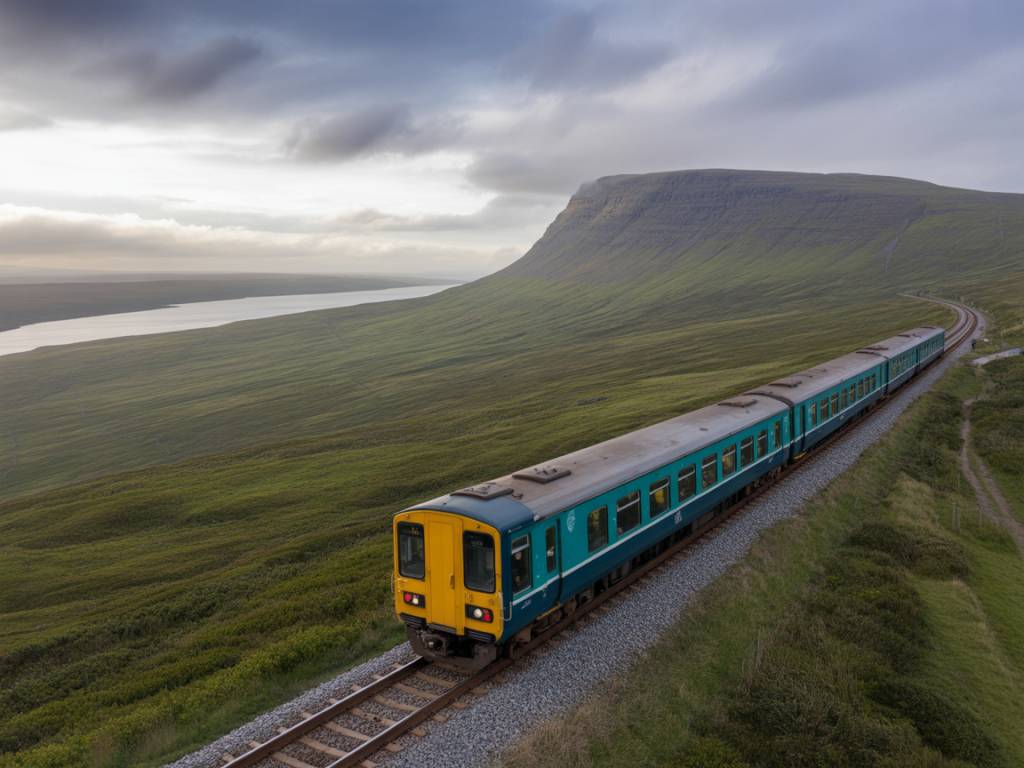
High-speed trains are great when you just want to get from A to B. But sometimes, the point is to stretch out time, watch the landscape change and feel like you’re actually travelling through a country – not just skipping over it.
The UK is made for that. Short distances, wildly different landscapes, and a dense rail network that still hides some genuinely spectacular lines. If you’re curious about “slow travel” – taking the scenic route on purpose – the UK’s panoramic train journeys are a very efficient way to start.
Below, a selection of the most beautiful routes across England, Scotland and Wales, what makes each one special, how long they take, roughly what they cost, and a few hard-learned tips to avoid staring at… a wall instead of a view.
West Highland Line (Scotland): Rannoch Moor, viaducts and the edge of the world
If you only do one scenic rail trip in the UK, most rail enthusiasts will point you here. The West Highland Line runs from Glasgow up to Oban and Mallaig, cutting through some of the emptiest, wildest landscapes in Britain.
Highlights:
- Rannoch Moor: a vast, boggy wilderness with no roads, no villages and often a layer of mist hovering over dark lochs.
- Ben Nevis and the Highlands: rugged peaks, pine forests and sudden openings onto deep glens.
- Glenfinnan Viaduct: the famous curving viaduct above Loch Shiel, known to Harry Potter fans but impressive even if you’ve never seen a wand in your life.
Where it runs: Glasgow Queen Street to Oban, Fort William and Mallaig.
How long it takes: Glasgow–Mallaig is around 5h 30, Glasgow–Oban about 3 hours.
What it costs: Advance singles can start around £20–£30 if you book early, but walk-up fares cost more. A Railcard (if you’re eligible) usually knocks 1/3 off.
Best seat for views: On the Glasgow–Mallaig service, sit on the left-hand side leaving Glasgow for the best views over Gare Loch, Loch Long and the Glenfinnan Viaduct.
Slow travel factor: This is a line where delays almost feel like a bonus. Trains can be unhurried, and that’s the point. You’ll watch sheep, deer and the occasional hiker rather than motorways. If you want to break up the trip, Fort William makes a good overnight stop for hiking or a detour to Ben Nevis.
Bonus: In summer, the steam-hauled Jacobite service runs between Fort William and Mallaig, using heritage carriages and spending a little more time on the Glenfinnan crossing. It’s more expensive and very popular – think “book months ahead” popular – but memorable if you’re happy to pay the premium.
Settle–Carlisle Line (England): Stone viaducts and big-sky Yorkshire Dales
The Settle–Carlisle route is what you picture when someone says “old-school railway”. Improbable viaducts. Lonely farmhouses. Dales and fells stretching to the horizon.
Highlights:
- Ribblehead Viaduct: 24 arches, 400 metres long, set against the backdrop of Whernside. The train slows here, and you’ll want your camera ready.
- Three Peaks country: Ingleborough, Whernside and Pen-y-ghent loom over green fields and dry-stone walls.
- Classic stations: Many stations have been restored with period details; some even have small museums or cafés.
Where it runs: Between Settle (North Yorkshire) and Carlisle, usually starting from Leeds.
How long it takes: Leeds–Carlisle is about 3h 30.
What it costs: Day ranger tickets and Northern Rail offers can make this surprisingly affordable – often under £30 for a full-day wander up and down the line.
Best seat for views: Left-hand side from Settle to Carlisle for the Ribblehead Viaduct and best views across Dentdale.
Slow travel factor: This line is made for hop-on, hop-off exploration. You can get off at Ribblehead to walk under the viaduct, or at Dent (England’s highest mainline station) to sample proper hill country. Just watch train times; services aren’t constant.
Cambrian Coast Line (Wales): Sea on one side, mountains on the other
If your idea of a good day involves coastlines, tiny stations and the feeling that the sea might just swallow the track on a stormy day, the Cambrian Coast Line earns its place on your list.
Highlights:
- Cardigan Bay views: Long stretches where the track hugs the shoreline, with vast sandy beaches and sea birds for company.
- Barmouth Bridge: A wooden and metal viaduct over the Mawddach estuary, with mountain views behind.
- Snowdonia in the distance: On a clear day, you’ll see the outlines of some of Wales’s highest peaks.
Where it runs: Shrewsbury to Aberystwyth and Pwllheli, with the most scenic part between Machynlleth and Pwllheli.
How long it takes: Shrewsbury–Pwllheli is about 4h 15; Machynlleth–Pwllheli about 2h 30.
What it costs: Advance singles can be modest if you avoid peak times. Transport for Wales also offers some rover tickets at certain periods, which can be cost-effective if you’re exploring for a couple of days.
Best seat for views: On the coast section, sit on the left heading towards Pwllheli for uninterrupted sea vistas.
Slow travel factor: Trains are not frequent, which is both a limitation and a feature. It forces you into a slower rhythm: plan a long lunch in Barmouth, stop for a beach walk in Harlech, or stay overnight in one of the small coastal towns instead of trying to “do it all” in a single afternoon.
St Ives Bay Line (Cornwall): The short but spectacular seaside sprint
Some scenic routes demand a whole day. This one asks for 10 minutes of your time and pays you back generously.
Highlights:
- Carbis Bay and St Ives Bay: Turquoise water, pale sand, and the kind of coastal views usually associated with travel brochures, not commuter trains.
- Compact and frequent: Easy to fit into a wider Cornwall trip without sacrificing a full day.
Where it runs: Between St Erth and St Ives in Cornwall.
How long it takes: Around 10 minutes end to end.
What it costs: A few pounds for a single ticket; many visitors use it simply to avoid parking stress in St Ives.
Best seat for views: Sit on the left leaving St Erth towards St Ives for the sea side.
Slow travel factor: The journey is short, but the mindset isn’t. Use it as your entry point into a car-free Cornwall day: train into St Ives, walk the coast path, swim if you’re brave, then ride back at golden hour when the light on the bay is at its best.
Heart of Wales Line: Quiet villages, rolling hills and time to think
The Heart of Wales line lives up to its name less through drama and more through intimacy. Instead of vast viaduct shots, you get glimpses of farms, market towns and woodlands that feel stubbornly unhurried.
Highlights:
- Knucklas and Cynghordy viaducts: Elegant multi-arch bridges crossing deep valleys.
- Llandeilo, Llandovery and small-town Wales: Stations that feel like stages in a village story rather than anonymous stops.
- Wildlife spotting: Look out for red kites, especially on clear days.
Where it runs: Shrewsbury to Swansea, via mid-Wales.
How long it takes: Around 4 to 4h 30 for the full route.
What it costs: Off-peak tickets can be reasonable. The line also sometimes features in rover and ranger tickets, which can offer good value if you plan multiple legs.
Best seat for views: Both sides offer interest, but many of the best valley views are on the right heading towards Swansea.
Slow travel factor: This is a line to bring a book, a notebook or simply your attention. Train frequency is low and journeys are long; that’s the attraction. You’re not just crossing a region, you’re drifting through it.
Highland Main Line (Scotland): Between Edinburgh/Glasgow and Inverness via the Cairngorms
If you’re heading for the Highlands anyway, you might as well make the journey part of the experience. The Highland Main Line connects Scotland’s central belt with Inverness and cuts close to the Cairngorms National Park.
Highlights:
- Drumochter Pass: One of the highest sections of mainline railway in the UK, often snow-framed in winter.
- Birch woods, lochs and moors: Classic Highland scenery that feels progressively more remote as you go north.
- Pitlochry and Aviemore: Handy stops if you want to mix train travel with hiking or winter sports.
Where it runs: Edinburgh/Glasgow to Inverness via Perth, Pitlochry and Aviemore.
How long it takes: Around 3h 30 from Edinburgh or Glasgow to Inverness.
What it costs: Advance fares can be quite competitive, especially outside summer and school holidays.
Best seat for views: Left-hand side from Edinburgh/Glasgow to Inverness often gives better mountain and moorland views, although both sides are attractive.
Slow travel factor: This is a working main line, not a leisure-only route. But travel at off-peak times and you’ll often get that spacious, open feel – especially in winter, when snow on the Cairngorm tops adds a different kind of drama.
North York Moors Heritage Railway: Steam through heather country
Not all the best panoramic rides are on the national rail network. Britain’s heritage railways are often short, seasonal and enthusiast-run – but they can deliver serious scenery for the time invested.
The North Yorkshire Moors Railway, running between Pickering and Whitby, is one of the standouts.
Highlights:
- Heather moorland: In late summer, the moors turn purple – a rare, almost surreal landscape seen from a gently puffing steam train.
- Goathland station: Recognisable to TV and film fans, but more interesting as a perfectly preserved rural station.
- Heritage rolling stock: Wooden interiors, slam doors, and the smell of coal smoke – a very specific kind of time travel.
Where it runs: Pickering to Whitby in North Yorkshire (with some services running only part of the route, depending on the timetable).
How long it takes: Around 1h 45 end to end if you’re on a through service.
What it costs: More expensive than regular trains; think in terms of an attraction ticket rather than a point-to-point fare. Expect roughly £40+ for an adult rover in high season; check the railway’s own website for up-to-date prices and deals.
Best seat for views: Carriages vary, but aim for a window seat on either side; there’s plenty to see as you climb onto the moors.
Slow travel factor: Everything about this line is built around lingering: long stops, station cafés, signal boxes, volunteers happy to answer questions about locomotives you didn’t know you cared about ten minutes earlier.
How to choose the right scenic route for you
The “most beautiful” line depends on what you’re actually after. A few quick filters help narrow it down:
- For maximum drama: West Highland Line, Settle–Carlisle, Highland Main Line.
- For coastlines: Cambrian Coast Line, St Ives Bay Line.
- For very short and easy: St Ives Bay Line (10 minutes), plus local walks.
- For heritage and steam: North York Moors Railway, or the Jacobite between Fort William and Mallaig.
- For quiet, reflective travel: Heart of Wales Line.
Ask yourself a few practical questions before you decide:
- How long can you sit happily on a train? If your limit is two hours, avoid the longest end-to-end runs and plan short segments instead.
- Do you want to get off and hike, or just ride? Lines like Settle–Carlisle and the West Highland are brilliant if you want to mix train plus walking.
- Are you travelling with kids? Shorter, higher-intensity routes (St Ives, heritage steam lines) can mean fewer “Are we there yet?” moments.
When to go: seasons, light and crowds
The same train route can feel completely different depending on the time of year and even the time of day.
- Spring: Longer days, fresh green landscapes, lambs in the fields on rural lines. Often fewer tourists than summer.
- Summer: Best chance of clear views and blue skies, but also busier trains and higher prices on popular routes. Book earlier.
- Autumn: Arguably the sweet spot on wooded routes – think golden forests in Scotland and Wales, and softer light for photography.
- Winter: Short days, but snow can transform Highland and moorland lines into something out of a film. Just be prepared for disruption and always check weather advisories.
Time of day matters too. Morning trains can give you mist over moors and quieter carriages. Late afternoon and early evening bring golden-hour light, especially on west-facing coasts and valleys.
Practical tips: seats, tickets and staying sane on board
A panoramic route is only as good as your ability to see out of the window. A few tactics make a disproportionate difference.
1. Aim for the right side of the train
This varies by line (noted above for several), but a quick online search for your specific route plus “best side for views” usually brings up crowd-sourced wisdom from people who’ve tested it the hard way.
On busy days, boarding early at the route’s starting point gives you first pick of seats. Some services allow seat reservations, but these rarely guarantee you a specific side.
2. Book ahead – but not blindly
Advance tickets on UK rail can be dramatically cheaper, but they lock you into a specific service. On scenic routes subject to weather, engineering works or spontaneous detours (“let’s get off and walk from here”), that can be a problem.
A compromise:
- Use advance tickets for the long, expensive legs (e.g. getting to Glasgow or Leeds).
- Use more flexible tickets, rovers or day passes on the scenic section itself, so you can improvise if a town or view tempts you off the train.
3. Consider railcards and passes
If you’re eligible, a UK railcard usually pays for itself in one or two longer journeys. Non-UK residents might look at BritRail passes, which, while not cheap, can make sense if you’re planning a week or more of intensive rail travel across multiple regions.
4. Pack like you’ll actually look out of the window
Sounds obvious, but many people treat these journeys like any other commute and bury themselves in laptops. If your goal is slow travel and big views, a different packing list helps:
- Offline maps and guide info: Mobile signal can be weak in remote areas.
- Snacks and water: Not all trains have catering, and many rural stations have limited options.
- Layers and a light scarf: Carriages can swing from overheated to chilly, especially on older rolling stock.
- Simple camera or phone with space: Not for constant shooting, but for the occasional moment you’ll want to keep.
Turning a train ride into a mini-journey
What separates a memorable scenic route from “nice views from a window” is often what you wrap around it.
- Build in one or two purposeful stops. On Settle–Carlisle, that might be a few hours walking from Ribblehead. On the West Highland, an overnight in Mallaig with a boat trip to the Small Isles the next day.
- Link trains with local buses or ferries. Scotland, in particular, rewards this: train to Oban, ferry to the Inner Hebrides, for example.
- Give yourself slack. Instead of connecting straight onto a tight onward journey, leave a margin of a couple of hours in case of delays – and treat that as bonus café or walking time rather than a dead zone.
Slow travel isn’t about wasting time; it’s about choosing where to spend it. On the UK’s best panoramic rail routes, that often means trading speed for vantage point – just you, a window and a moving, constantly changing frame of sea, hills, moors or mountains.